
A team of researchers analyzed the proteins conserved in 23 teeth of Homo naledian extinct human relative, and did not find in any sample the protein marker that is usually associated with the Y chromosome. The question arises: where are the males? The honest answer is that we don’t know yet, and understanding why is more interesting than any blatant headline.
What exactly did they look for in the enamel?
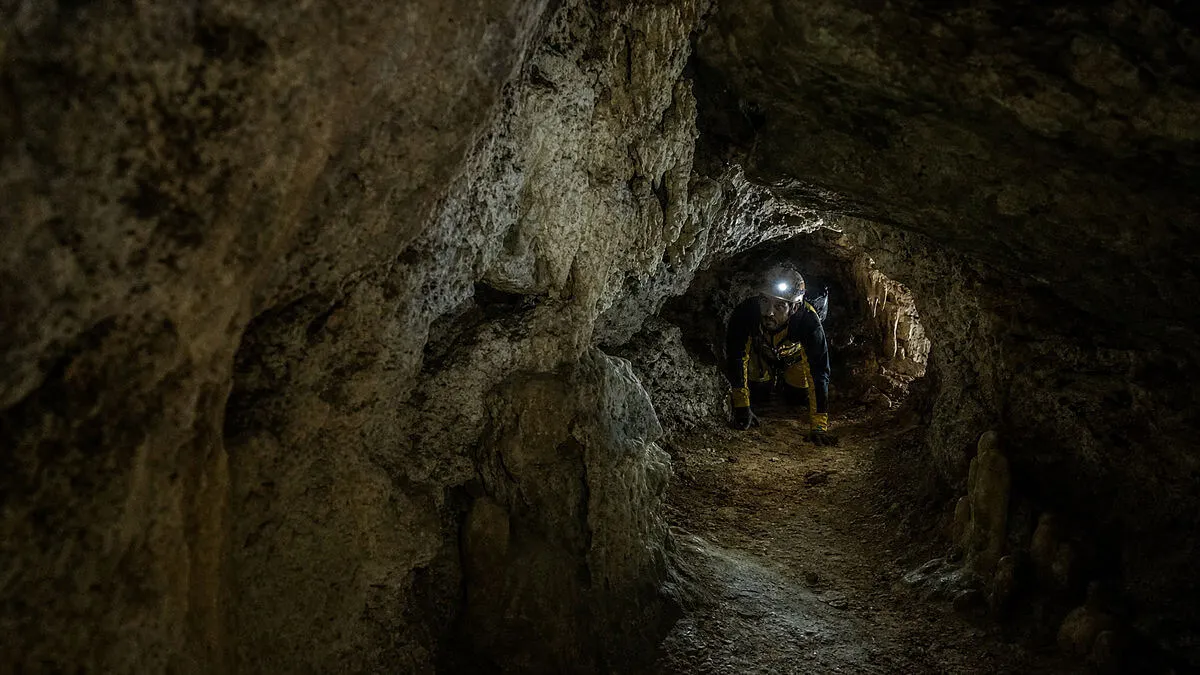
The fossils come from the Rising Star cave system in South Africa, a site that has revealed hundreds of remains of this species since the last decade. The work, published in the magazine cell and headed by researcher Palesa P. Madupe, did not attempt to reconstruct the face of each individual or determine their age at death. Its objective was more specific: to check whether protein peptides appeared in the tooth enamel. amelogenin Y (AMELY)a variant of a protein that is produced from a gene located on the Y chromosome.
Amelogenin is a protein involved in the formation of enamel. There is a version linked to the X chromosome, called AMELX, and another linked to the Y chromosome, AMELY. Since, generally speaking, individuals with a Y chromosome produce AMELY and those without it only produce AMELX, detecting this second variant functions as a clue to the likely chromosomal sex. It is not a complete genetic portrait, but rather a specific signal: the presence or absence of a very specific protein fragment.
The result: zero male markers
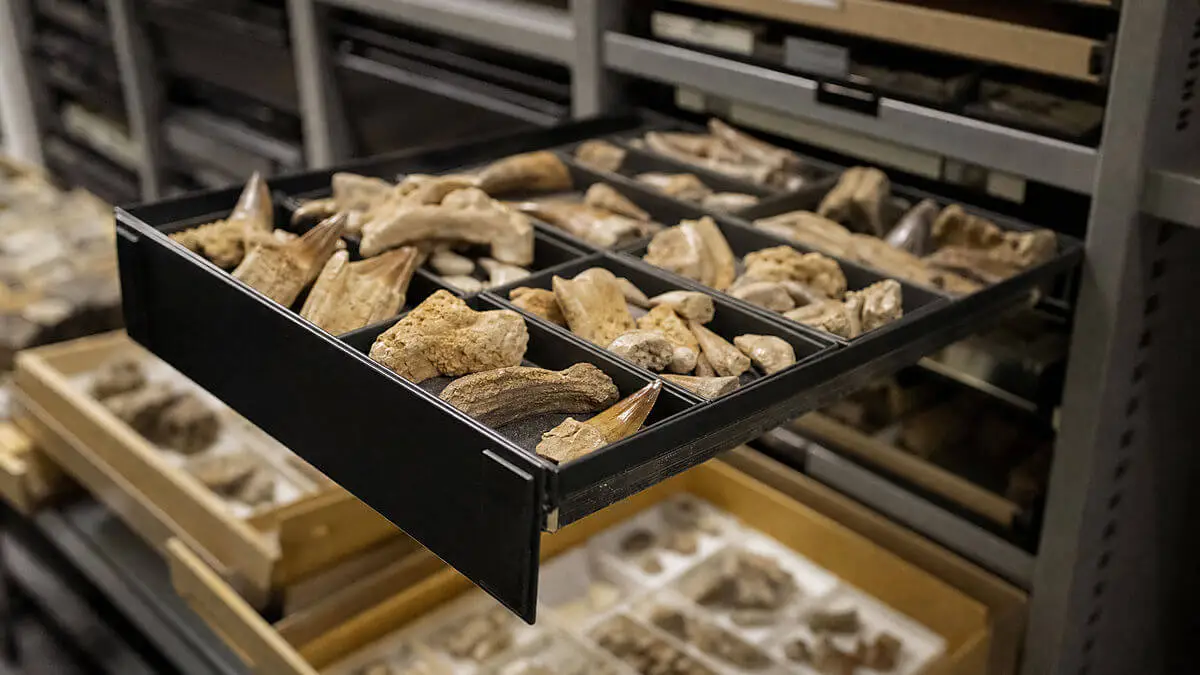
The team worked with 23 teeth which, according to the study summary, correspond to a minimum of 20 individuals. The remains came from four different areas of the Rising Star system: the Dinaledi chamber, the Lesedi chamber, the sector known as Hill Antechamber and the UW 110 location. To extract the proteins, in most cases they resorted to microdestructive acid etching on the enamel surface, and then identified the peptides using tandem mass spectrometry, a technique that separates and measures fragments of the molecules.
The central data is clear: none of the samples produced a reliable identification of AMELY. The probability analysis placed practically all of the individuals as compatible with a feminine interpretation, although with different degrees of confidence depending on the case. In other words, where at least some males would be expected, the proteins did not show it.
It is advisable to stop at the method, because that is where part of the rigor lies. The researchers did not accept any rough match that the computer program suggested. They required strong evidence of the diagnostic fragments that distinguish AMELY from AMELX, and discarded tentative matches that did not meet that threshold. That is, they preferred not to affirm rather than to affirm too much.
The difference that changes everything: absent is not the same as undetected
Here is the nuance that separates a conclusion from a hypothesis. Not finding AMELY may mean that the individual did not have it, but it may also be due to other causes. In paleoproteomics—the study of ancient proteins—the distinction between absent marker and marker not detected is decisive. A positive signal is informative: if AMELY appears, something produced it. A negative signal, on the other hand, is more difficult to interpret, because it can reflect very different realities.
Enamel works like a mineral capsule capable of preserving small amounts of protein for very long periods. But this result depends on several conditions: that the proteins have survived, that the sample analyzed contains the specific peptide sought and that genetic variation has not altered the marker. If any of these conditions fail, the absence ceases to be proof and becomes an unknown.
The authors themselves contemplate a striking alternative explanation: that some men of Homo naledi carry a deletion or mutation in the gene AMELY that prevented generating the expected peptide. It would not be the first time that a population presents variants of this type. This does not mean that it is proven for this species; is a scientifically reasonable possibility that would require additional testing, such as identifying those variants in other individuals. But its mere existence forces caution.
Why doesn’t this prove a female-only burial?
The jump from “we found no male markers” to “the caves were a female-only funerary sanctuary” is enormous, and the available evidence does not support it. There are at least three reasons to stop before that conclusion.
-
The sample is a sample. Twenty-three teeth from four sectors of a cave network constitute an extraordinary set for such ancient remains, but they do not necessarily represent all the individuals who lived in the region or all the bodies that could reach Rising Star. The males could be deposited in another place not yet analyzed.
-
The marker does not speak of identity or rituals. AMELY provides information about a region associated with the Y chromosome. It does not reveal how each individual was identified, what role they occupied in their group or what rules governed a possible funerary deposit. Going from chromosomal sex to ritual intention requires much more than protein.
-
Conservation and genetics need to be ruled out. To maintain that there was selection by sex, it would be necessary to demonstrate that the sample well represents the individuals deposited and eliminate explanations linked to protein degradation or genetic variants. That work is not done yet.
Researcher Lee Berger, corresponding author of the study, formulated it as a probability, not a certainty.
“The most likely explanation for the absence of the marker seems to be that we are seeing a sex bias.”
What this work does provide
That the interpretation is prudent does not detract from the value of the finding. Recovering tooth proteins from an extinct human relative and using them to estimate the probable sex of a score of individuals is a remarkable technical achievement, not least because DNA is rarely preserved in warm climates for so long. The proteins provide a signal independent of bone shape, something especially useful when the remains are fragmented and morphology is not enough to assign sex.
The study also illustrates how an archaeological question—who was deposited in these caves and why—is addressed today by combining archaeology, genetics and proteomics. None of these tools replace the others. Proteins are no substitute for spatial context, stratigraphy, or the study of how remains accumulated. And it is advisable not to pretend a precision that the work itself does not have: its minimum count of individuals varies between 20, 21 and 22 depending on how two specimens that could belong to the same person are grouped, so the most honest thing is to talk about “23 teeth from at least 20 individuals.”
The absence of male markers in Rising Star is, for now, an extraordinary clue that opens hypotheses instead of closing them: a sample biased towards female individuals, funerary selection or a genetic peculiarity of the species? For now there is no answer, and the next step is to analyze more teeth from other sectors of the cave and look for genetic variants that could explain the absence of the marker in the men.