
In June 1845, the crowd hurried in London to discover a strange collection and hope to see its owner. “Vidocq, head of the Paris security police, whom he created and directed for twenty-nine years with extraordinary success”boasted the cover of the exhibition catalog. The convict who became a policeman was preparing to celebrate his seventieth birthday. After having been forced to resign from the police, Eugène-François Vidocq (1775-1857) had in turn reinvented as owner of an infalciable paper factory (he also held a patent for invisible ink), then founder of a famous private detective agency.
But his criticism and detractors of the old convict signed the death warrant for each of his commercial adventures. Murchite, fell into disgrace in France, Vidocq was looking for a British publisher ready to publish the new salvo of his memories. In London, he had hope to bail out his finances thanks to the sale of certain exposed objects, a heterogeneous assortment which included paintings of battles, as well as thousands of factual tropical fruits.
But the public was naturally attracted by the costumes carried “To discover and stop criminals”THE “Bloody weapons taken from the authors of crimes”or even handcuffs, irons and leaded boots which he was known for having often freed himself. Little credible, the legend he had taken care of writing was nonetheless a great source of literary inspiration for Victor Hugo (who lends certain Vidocq traits to three central characters from the central characters MiserableJean Valjean, Inspector Javert and Mr. Thénardier), Alexandre Dumas Père (Policeman Jackal in The Mohicans of Paris) or Honoré de Balzac (the character of Vautrin in The Human Comedy).
The “Vidocqmania” had even won the Anglo-Saxon literary scene, since he would have inspired Arthur Conan Doyle to shape his hero Sherlock Holmes and even slipped into the works of Edgar Allan Poe (the character of the detective Auguste Dupin, especially in Double assassination in rue Morgue) or even Herman Melville, who quotes Vidocq in Moby Dick.
“Undercover” in Scotland Yard
In the United Kingdom or the United States, Eugène-François Vidocq did not only inspire novelists. On the other side of the English Channel and the Atlantic, some professionals in the application of the law still consider this ambiguous figure as the father of the modern criminal investigation. Beyond his escapades, the unique techniques and methods of the French detective have been emulated. His safety brigade, future French national police, created in Paris in 1812, was the first criminal investigation office made up of coverage agents. Vidocq was not satisfied to teach them the subtle art of investigation andundersonal (as well as a sense of sometimes questionable ethics), but had made a deep reform of the institution.
He had imposed registers there with a system of sheets and introduces criminalicist by systematizing ballistic studies or fingerprint taking like that of shoes. A revolutionary approach whose Home Secretary –The Secretary of State in the British Interior – Robert Peel was admiring. The future Prime Minister of the United Kingdom (1841-1846) founded the Metropolitan Police Service From London, better known as his headquarters Scotland Yard, in 1829. To ensure the success of his business, he asked Vidocq’s collaboration in the training of police under the coverage of what would become the Criminal Investigation Department (CID). But Vidocq’s chance was going to turn short.
In 1832, under pressure from criticisms which demanded transparency, the Paris police headquarters decided to get rid of its employees in the criminal past. Renowned for its brutal ways, Vidocq was therefore forced to resign. The following year, he created the “Trade Information Office”. This ancestor of current rating agencies offered commercial intelligence services: debt recovery, verification of the filing system developed by Vidocq to the security. Subscribed companies could thus control the history of their partners or customers. In his book Notation agenciesthe economist Norbert Gaillard specifies that Vidocq was responsible for “Detect dishonest entrepreneurs and companies with a questionable solvency”.
Troubled agent
At the same time, the information office managed delicate so -called “confidential” cases. Private surveys consisted of carrying out spouses of spouses suspected of adultery, research of disappeared or the recovery of personal property, which went from jewels stolen from the race horse of the mayor of Rouen via the cockato of a speechless doctor. These sometimes delicate cases provided him, on occasion, to guarantee his freedom. Because if he had officially left the safety, Eugène-François Vidocq was in reality an influential figure operating in the margins of power. In 1845, it was not simply an old man nostalgic for his past exploits or eager for recognition that landed in London, but a man on a mission.
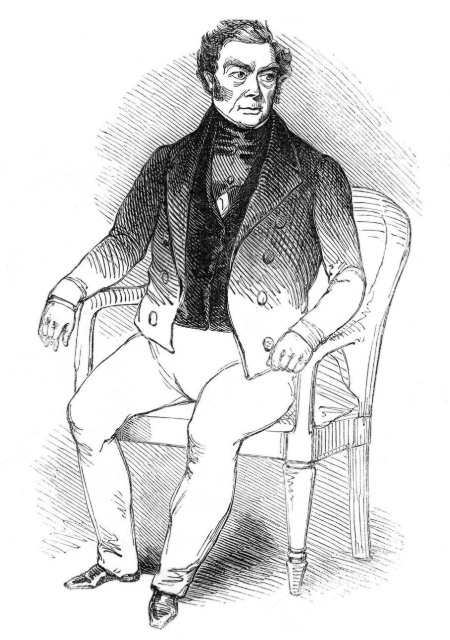
The English criminologist Philip John Stead devoted a biography to him in 1953. He said that Vidocq played double agents far beyond his 70th anniversary. A year after the exhibition, he went to London, this time to secretly meet Louis-Napoleon Bonaparte. Paranoid, he was hiding in the cellars of a wine merchant. For several years now, Vidocq has put its skills at the service of Bonapartists supporters. The escape specialist would have even helped him, it is said, to escape from the Ham fortress, in the Somme, in 1846. Vidocq drew from his collection to provide the future Napoleon III with the disguise of workers who allowed him to spin English?
In 1848, the former police officer did not hesitate to accept a mission offer emanating from Alphonse de Lamartine, opponent of politics of Louis-Napoleon Bonaparte. The beloved filou with incredible adventures did not bother with partisan scruples: he infiltrated workers’ circles in parallel to orient voters in favor of Louis-Napoleon, while claiming to support an Orleanist conspiracy. When in 1849 he was imprisoned in the Paris concierge for fraud, it was in reality to spy on some fellow prisoners with revolutionary and socialist ideas.
Vidocq, the FBI and the Cold Cases
In 1924, almost a century after the birth of the private agency of Eugène-François Vidocq and on another continent, John Edgar Hoover took the head of the Bureau of Investigation. A great admirer of Vidocq, whose romantic memoirs he devoured, the techniques developed by the French policeman inspired the US official: information, identification and control would be the pillars of the modernization of the institution. J. Edgar Hoover imposed the use of fingerprints, centralized files and created scientific laboratories. Successfully: in 1935, the renamed institution Federal Bureau of Investigation (FBI) became a federal agency with extensive powers.
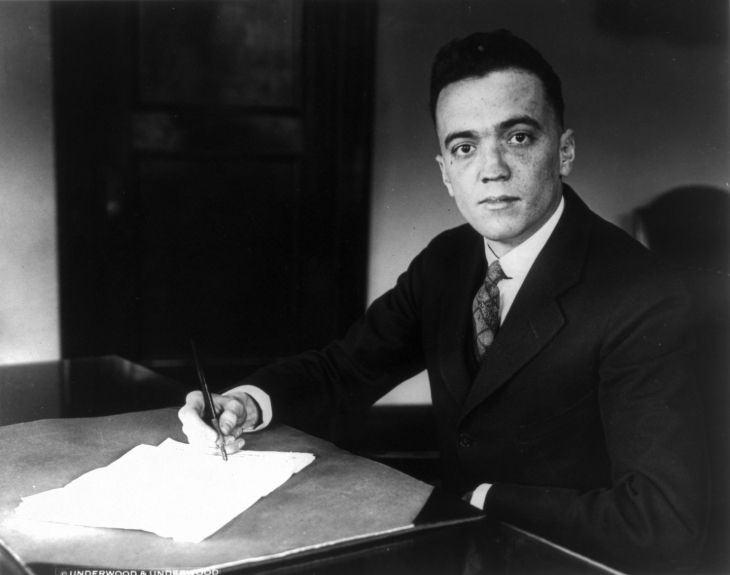
The motivations of J. Edgar Hoover were not only patriotic. The man in command of the FBI, from 1924 until his death in 1972, was obsessed with power. Like Vidocq, Hoover practiced fierce surveillance, constituting secret files on various political figures, including presidents. For almost half a century, “J. Edgar ”acted in the shadow and worn out of questionable methods, causing effectiveness on transparency. Like Vidocq before him, the guardian of order was also the instrument of his abuses.
In Donald Trump’s America, the FBI (the institution as its historic headquarters) no longer benefits from the same aura. Vidocq is doing better: he is still celebrated there and his memory honored through the Vidocq Society. This closed circle does not welcome more than eighty-two members, the number of years experienced by the legendary French figure which inspired its creation in 1990 in Philadelphia (Pennsylvania). They are profilers (FBI active or retirees), criminal investigators, psychologists, scientists or legal physicians. Once a month, the members of this club come together to look into a Cold Case, like that of the famous “Boy in the Box”, the unrexociated affair of the murder of Joseph Augustus Zarelli, a 4 -year -old boy found dead in a cardboard box on the outskirts of Philadelphia in 1957.
