
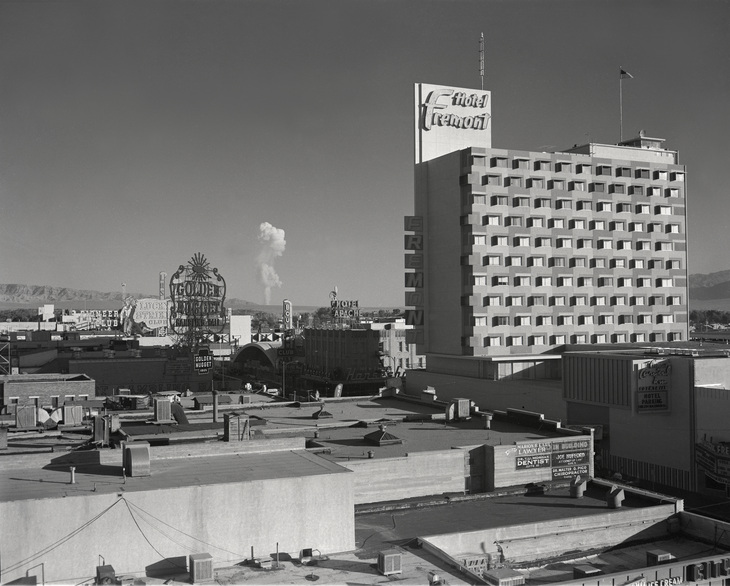
Las Vegas (Nevada), summer 1952. The night was enamelled with multicolored neon lights. On the roof of flamingo, we sip “atomic cocktails” concocted for the occasion: a clever mixture of vodka, cognac, sherry and champagne. The looks of the customers of the Hotel-Casino are on the northwest. A hundred kilometers away, an atomic bomb is about to explode.
Suddenly, an orange glow engulfs the horizon. In the space of a few seconds, we see there as in broad daylight. Some customers sketch a slight movement of hindsight, others cover their faces with their hands (even at this distance, the flash is brighter than sunlight). When the atomic fungus rises to the distance, some admiring whistles are heard. It will take five minutes for detonation, a thunderous drum bearing, reaches the ears of tips back.
Atomic bombs java
Surrealist, this scene is familiar to the regulars of Las Vegas in the 1950s. For some time, the metropolis has invented a new stage name, “Atomic City”. To cope with the dry losses of the Great Depression of the 1930s, the city of Nevada legalized the Games of Money in 1931. Organized crime bosses made their new playground, opening casinos and luxury hotels. Each year, eight million tourists come to tease roulette there, injecting $ 200 million in this entertainment paradise where the night is queen.
Electric and insomniac, the “capital of the vice” contrasts with the desert nature that surrounds it, a large expanse of pebbles, thorny roots and sand as far as the eye can see. In the dry plains of Nevada, we do not hear the howls of the jackpots, but the sizzle of the military dosimeters. It was there that the American government opened a nuclear test field in January 1951 to perfect its atomic weapon. The location is ideal: low population density, little precipitation and altitude winds. What is more, the site is already under federal control, which facilitates paperwork.
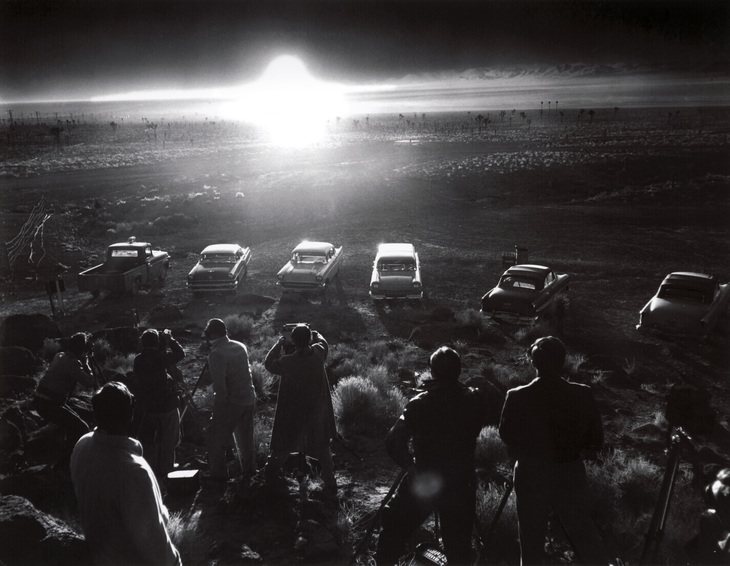
Covering 3,500 square kilometers, the nevada test site (Nevada Test Site) is inaugurated by the explosion of a kilotonne bomb, called Able, on January 27, 1951. This time, nuclear tests do not take place on distant atolls in the Pacific, but can be seized by photographers and journalists who camp at the gates of the desert. “First there is a heat wave, then a shock, strong enough to bring down an unprepared man”reports a journalist from the Washington Bulletin. Retransmis on television, the images go around the country: we will soon take the family road to attend live explosion live…
Room with a view
This is how Las Vegas, opportunistic, embraces atomic age. To inflate their turnover, local establishments do not hesitate to organize atomic fiestas on their rooftops, in order to allow their customers to admire authentic nuclear mushrooms.
The well-named Atomic View Motel promises in his brochures “A clear view of the explosion since the comfort of a lounge chair”. Tourists plus helpers prefer to settle away from Las Vegas garish neon lights, on the edge of the desert: the Chamber of Commerce even published a card listing the privileged views to organize a picnic! We come with the family, with sandwiches and kodak in shoulder, in a relaxed atmosphere of summer vacation.
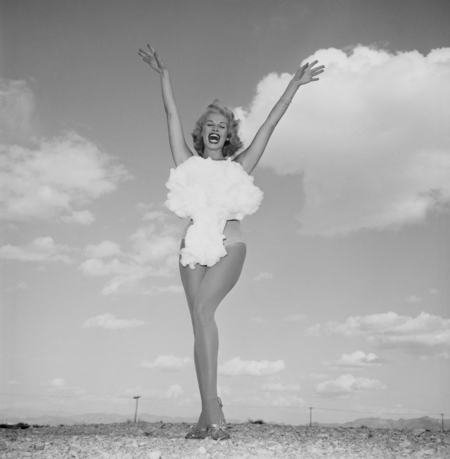
Better still: capitalizing on atomic fever, the municipality is organizing ephemeral beauty contests aimed at electing “miss atomic bomb”. Current in diaphanous dresses simulating an atomic fungus, the winners naively pose in front of the photographers, promoting a region which boasts of undergoing an explosion of nuclear bomb every five weeks. In the American collective conscience, Las Vegas has become “The most bombed place in the world”.
Atomic tombs
Of course, some safety instructions have been set up by the municipality. Tourists can in no case approach the epicenter, the area being padlocked by a military cord. And it is recommended to wear sunglasses. What about radioactive fallout? During this nuclear reckless period, the surrounding population is convinced that test damage is limited to a few broken windows and interrupted naps at most.
But several scandals will question this vision of things. Despite meteorological forecasts, the prevailing winds carries the radioactive particles far beyond the state borders: they are detected in Arizona or in Utah. Voices are rising. We are talking about cancers, leukemia, poisoned cattle. Babies contract thyroid cancers after drinking irradiated cows milk. How did it happen? Experts raise their shoulders. We do not know it yet, but a dose equivalent to 150 million curies (three times the radiation produced by the nuclear accident of Chernobyl) was released in the atmosphere in a dozen years.
In 1963, after 126 more or less conclusive atomic trials, the authorities of the Nevada test site decided to move their experiences in a more discreet place, in the basement. If the new policy no longer allows tourists to admire atomic mushrooms to horn the horizon, the American staff will lead to the site nearly a thousand nuclear tests until their final stop in 1992, motivated by the end of the Cold War and the implosion of the USSR.
It was not until 1990 that the Retlaim Expose Compensation Act offered financial compensation to the victims (or to their families) having suffered from exposure to radiation. Nowadays, the Las Vegas region still radiates. Some bars and casinos of the city still serve “atomic cocktails” but, on their terraces, we now admire only sunrise.
