
From atomic clocks to sensors capable of detecting the brain’s magnetic field, quantum metrology marks the beginning of a new scientific revolution. Based on the principles of quantum mechanics, it allows for ultra-precise measurements that are changing the way we understand—and control—the physical world.
What is quantum metrology and what is it for?
Metrology is concerned with defining, regulating and maintaining units of measurement, such as the second, the meter and the kilogram. Its importance, however, goes further: it is present in many aspects of daily life, including the service networks, providers and communications on which we depend.
Metrology helps these systems operate efficiently and reliably. In short, the different forms of physical and chemical measurement influence the quality of the world in which we live. The saying is attributed to Galileo: “measure what you can measure, and what you cannot measure, make measurable.” Hence the essential role of metrology in the natural sciences.
Quantum metrology studies and develops methods to measure physical quantities – also called parameters – with high resolution and sensitivity. To do this, it uses the properties of quantum mechanics, especially quantum entanglement.
Quantum technologies establish a roadmap in which quantum metrology and sensing occupy the first stage and are closely related. The development of quantum cryptography is expected afterwards, while quantum simulation and computing remain for the long term.
What does quantum physics have to do with metrology? Very much: it could be said that it is the most metrological theory that exists. One of its main characteristics is the discrete nature of many physical quantities, such as the energy of a particle or its orbital and spin angular moments.
The discrete nature of these magnitudes facilitates their experimental measurement compared to the continuous magnitudes of classical physics of Newton and Galileo, among others. Curiously, one of the postulates of quantum mechanics is called “measurement”, because it plays an essential and different role in quantum theory than it does in classical theories.
On the other hand, quantum magnitudes are very sensitive to disturbances in the environment. This sensitivity is useful for creating sensors capable of measuring properties such as gravitational, electric and magnetic fields, and then applying them in different areas.
Quantum sensors are a case of serendipity. A quantum system, or qubit, is very fragile because it easily interacts with the environment around it. But a sensor is, precisely, a device that probes its environment to obtain useful physical information: thus, the fragility of quantum systems becomes a virtue.
These sensors take advantage of the principle of superposition and, in general, quantum entanglement to achieve greater sensitivity and resolution. They can be used, for example, to detect voids under the ground and locate mineral deposits without excavating. They will also be used to provide non-invasive diagnoses of damaged or diseased areas.
Two quantum revolutions: from discretization to entanglement
Currently, two quantum technological revolutions are distinguished, both in terms of their foundations and their applications. Both have applications in quantum metrology.
The first quantum technological revolution is based on the discrete nature of physical quantities, such as the energy states of atoms. This discretization is closely linked to digitalization, which has transformed our world, and to the greater precision of digital mechanisms compared to analog ones.
In the mid-20th century, the understanding and application of the laws of quantum mechanics in the microscopic atomic world gave rise to innovative technologies, such as the transistor and the laser. The impact of this first quantum revolution on our society can hardly be underestimated. Now, our growing ability to manipulate quantum effects in personalized systems and devices is paving the way for a second revolution.
The second quantum technological revolution is based on the principle of superposition. One of its most emblematic examples is the double slit experiment, in which the properties of a single particle are superimposed.
When quantum superposition affects multiple particles, the resulting phenomenon is quantum entanglement, a fundamental resource for quantum information. This allows the development of new algorithms and quantum simulators, among other applications.
Superposition allows a quantum system to represent a combination of several possible states. In quantum algorithms, this can be used to process certain possibilities together, although one measurement does not allow us to extract all that information as if it were independent classical data.
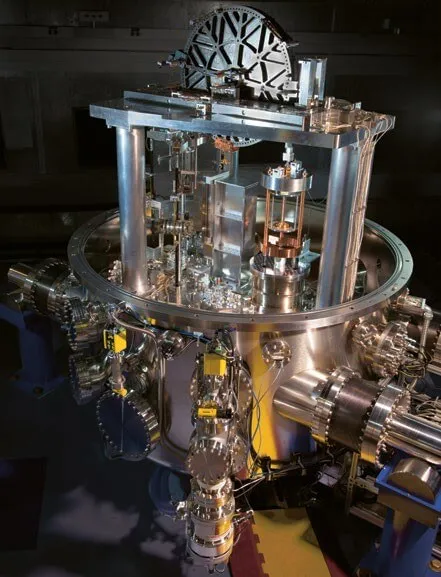

Quantum technologies are ultimately expected to open new opportunities to address major challenges in fields such as energy, health, security and the environment. Some are already beginning to be exploited commercially; others might require years of careful research and development.
There will also be technologies that we cannot even imagine today, until they are available, as happened with the laser and the transistor.
There will also be technologies that we cannot even imagine today, until they are available, as happened with the laser and the transistor.
The International System of Units and the Constants of Nature
The cornerstone of metrology is the International System of Units (SI). Measurement is a fundamental objective of physics, chemistry and other natural sciences. A physical quantity is a property that can be measured with an instrument, so the value obtained is objective.
To measure, a physical magnitude is compared with a reference unit, materialized in a standard. Therefore, properly defining the units is crucial. In ancient times, measurements were based on artifacts: for example, the elbow of the pharaoh’s arm to measure lengths and different containers to measure the capacity of liquids or cereals.
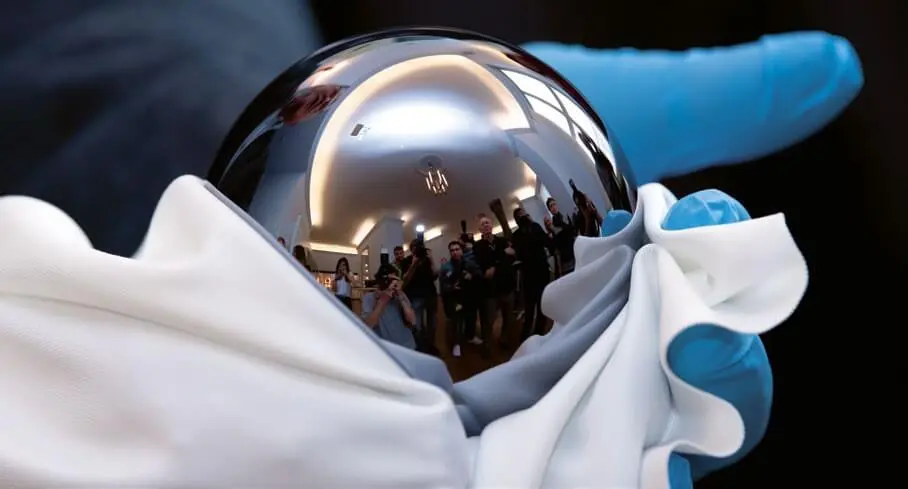
The renewal of the International System of Units was approved at the assembly of the 26th General Conference of Weights and Measures (CGPM), meeting in Versailles from November 13 to 16, 2018, and was launched in 2019.
This renewal constitutes a great revolution: it defines all basic physical units based on seven defining constants, whose values are considered fixed and without uncertainty. From them the units of measurement are derived, starting with the second, unit of time, and the meter, unit of length, and continuing with:
- the kilogram, unit of mass;
- the ampere, unit of intensity of electric current;
- the kelvin, unit of temperature;
- the mole, unit of quantity of substance;
- the candela, unit of luminous intensity.
Thus, SI units are independent of any device. This offers important advantages: a unit does not deteriorate over time and can be played anywhere in the world, contributing to its universality and stability.
The SI review is based on three principles:
- Separate definitions from specific experimental implementations. Thus, units can materialize independently at any place and time.
- Base the units on constants of nature with exact values. These constants are immutable because they are associated with well-known and experimentally proven laws of nature.
- Create a secure foundation for future developments. As new technologies emerge, practical realizations of the units can be added without redefining them, since they will continue to be linked to a constant of nature.
Behind each fundamental constant is one of the fundamental theories of physics: it can be said that they represent the DNA of our universe. If there were other universes, each would have a different set of fundamental constants.
Applications of quantum metrology and sensors
Current applications of quantum metrology are grouped into several areas:
- Gravitation, rotation and acceleration. Cold atom interferometry techniques allow atoms to interact with matter for a relatively long time. This increases the sensitivity and precision of measurements and allows the development of high-precision, drift-free gravimeters, accelerometers and gyroscopes. These devices can be used in civil engineering, inertial navigation systems and prospecting and exploration of natural resources.
- Time. It is one of the most developed areas of quantum technologies. Atomic clocks already use cesium source microwave standards, but increasing precision requirements demand new technologies. Optical atomic clocks are already a reality: they use light from the visible spectrum and offer much greater time precision, up to one hundred times more. They can be useful in the telecommunications and energy sectors, as well as for optimally synchronizing communications networks and terrestrial universal time providers.
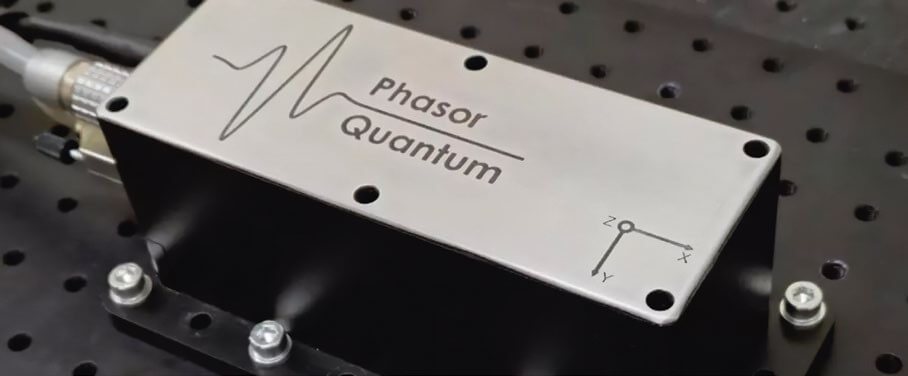
- Magnetic fields. Magnetometers that take advantage of nitrogen vacancies in diamond can measure very small magnetic fields. Current superconducting quantum interference devices (SQUIDs) achieve similar precision, but require cryogenic cooling. In contrast, magnetometers based on nitrogen vacancy centers operate at room temperature. They can detect and monitor human brain activity, with important medical applications.
- Chemical detection. Some techniques take advantage of quantum effects, such as quantum dots in nanoscale semiconductor structures. Devices that use them can be useful in preserving legality, for example, by detecting illegal substances.
- Images. Quantum-enhanced imaging techniques include those that use correlated photons, capable of substantially improving quality by reducing background noise; quantum multiphoton microscopy, and quantum interferometry. Devices that use these techniques can greatly increase the resolution of images.
The current technological world and its future development will depend largely on the quality and precision of sensors, increasingly present in different applications. Quantum metrology is called to be the first protagonist of the second quantum revolution, which is already underway.