
It is one of the most memorable Arctic expeditions in history and also one of the most tragic. The Franklin expedition, which has been the subject of such successful novels and television series as The Terror, claimed the lives of the entire crew aboard HMS Terror and HMS Erebus. In recent years, scientific research has taken a step forward with regard to the recovery and identification of some members of the lost sailors, as has been the case of John Bridgens, William Orren and David Young. Now, a new discovery is added to the previous ones.
For more than a century and a half, the discrepancies between the data provided by a skeleton abandoned on the coast of an Arctic island, documents that pointed to a specific man, and clothing that pointed to a different man They did not allow one of the most persistent files of the Franklin expedition to be closed. In 2026, mitochondrial DNA has resolved the mystery of the identity of one of the lost crew members.
Mitochondrial DNA has made it possible to discover the identity of one of the sailors of the Franklin expedition after decades of debates.
One body, two possible identities
In 1859, a search party led by Francis Leopold McClintock found a skeleton on the southern coast of the King William Islandin the present territory of Nunavut. Documents appeared next to the remains, the so-called Peglar Paperswhich suggested that the body belonged to Henry Peter “Harry” Peglar, foretop captain (that is, the sailor in charge of surveillance from the top of the mast) of the HMS Terror.
However, something didn’t add up. The body was wearing clothing associated with a butler or an officer’s servant, not a man of Peglar’s rank. This anomaly raised a reasonable doubt: what if the documents had been transported by another person to that point in the march? This contradiction kept the investigation in suspense for 167 years.
Documents appeared next to the remains, the so-called Peglar Paperswhich suggested that the body belonged to Henry Peter “Harry” Peglar
What was the Franklin expedition?
The Franklin expedition left England on May 19, 1845 aboard HMS Erebus and HMS Terror, with the aim of completing the Northwest Passage, the long-awaited sea route through the Canadian Arctic. 134 men embarked, but five returned from Greenland, so 129 continued north.
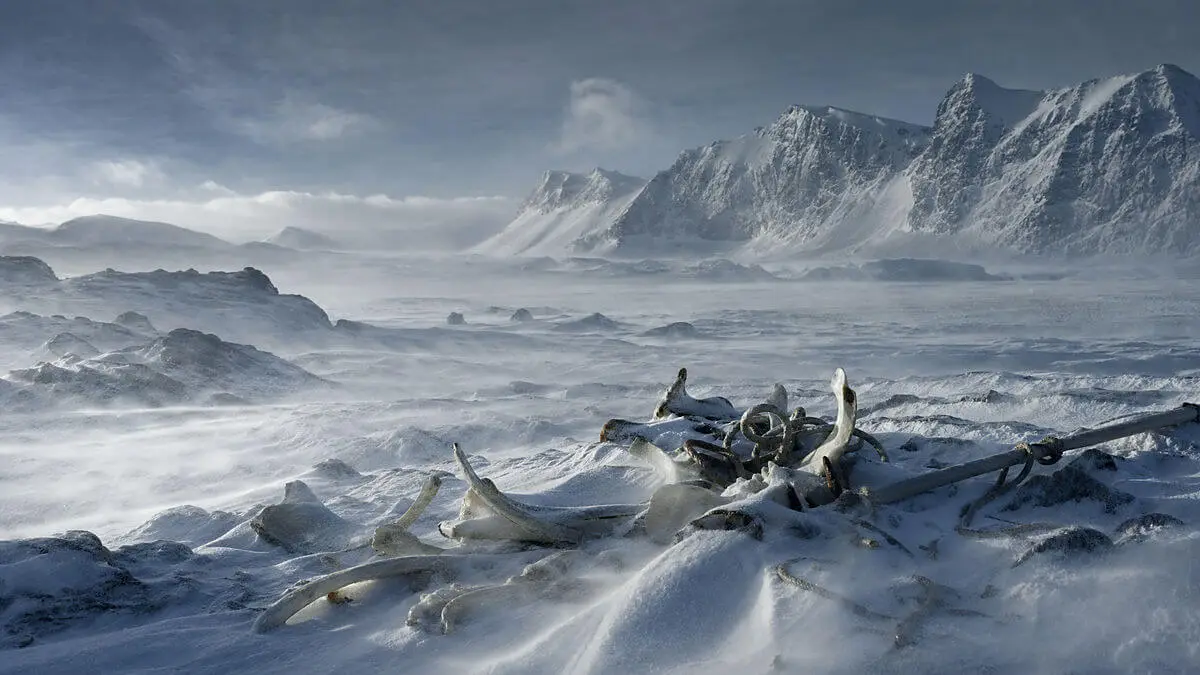
In September 1846, the ships were trapped by ice and abandoned. April 22, 1848. The 105 survivors then began a land march towards the south in search of a route to salvation. None of them succeeded. The Franklin expedition thus became one of the greatest catastrophes of polar exploration, a puzzle that archeology, Inuit oral tradition and, now, genetics continue to reconstruct piece by piece.
The body was wearing clothing associated with a butler or an officer’s servant, not a man of Peglar’s rank. What if the documents had been transported by another person to that point in the march?
How to identify a sailor who died 178 years ago
The study that solved the mystery of the skeleton’s identity was published in 2026 in the magazine Polar Record by Douglas R. Stenton, Stephen Fratpietro, Kaitlyn Gorsalitz, and Robert W. Park. The study team drew on a chain of converging evidence.
The first link is found in mitochondrial DNA, a type of genetic material that is inherited mainly through the maternal line and that is very useful in ancient remains. Since each cell contains numerous copies of these molecules, the probability of recovering a readable sequence increases.. The researchers extracted DNA from the bones and compared the profile obtained with that of living descendants, who were located through genealogical research.
According to the researchers, the result was clear. The DNA on the remains matched that of a maternal line descendant of Harry Peglar, with a zero genetic distancethat is, without differences in the markers analyzed. As a countertest, samples of descendants of six possible officer servantsa work that followed the alternative hypothesis suggested by the clothing. In the latter case, no sample matched the DNA from the bones.
The positive coincidence with Peglar, added to the discarding of the alternative candidates, reinforces the interpretation that the documents belonged to Peglar himself and were not simply carried by another member of the group. The DNA, the genealogy, the archaeological context of the discovery and the naval archives, which provide rank and destiny of each man, support each other.
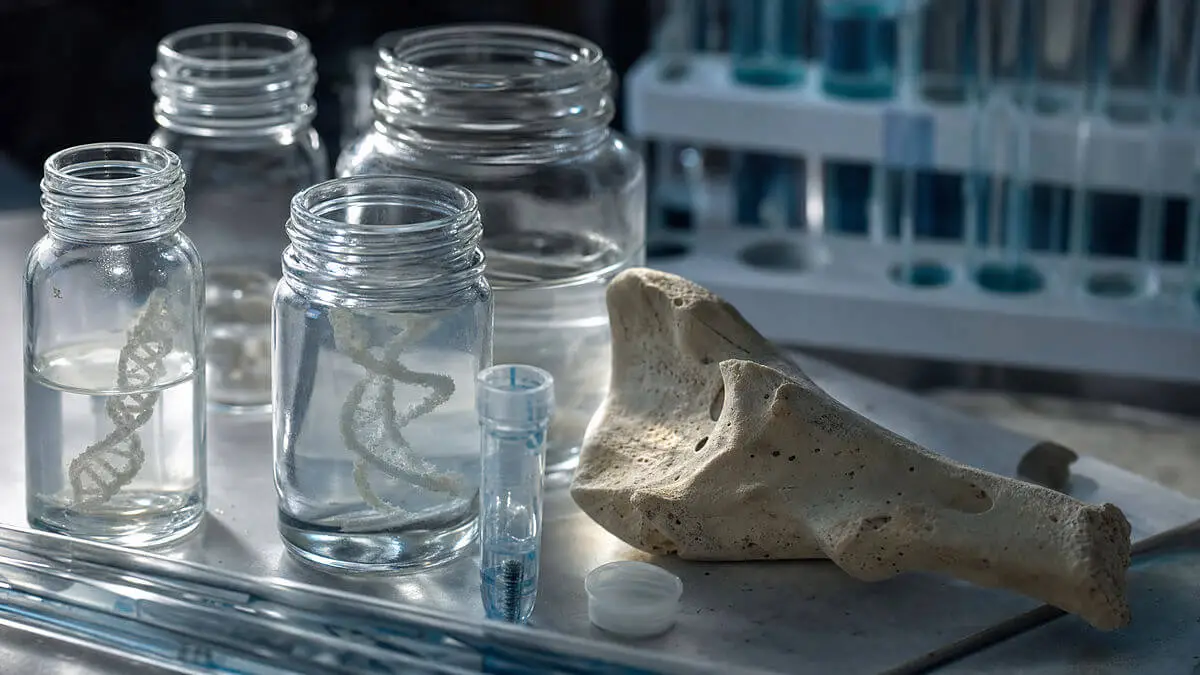
DNA, genealogy, the archaeological context of the discovery and naval archives confirm that it is Harry Peglar.
Three other crew members with names and surnames
In 2026, a second work published in Journal of Archaeological Science: Reports identified three more sailors, all of them belonging to the crew of HMS Erebus: William Orrensailor; David Youngcabin boy first class; and John Bridgensservant of subordinate officers.
The technical details illustrate how meticulous the work is. Bridgens was identified from a right maxillary molar and a humerus fragment recovered at the NgLj-3 site; to Orren, through a fragment of the left humerus found in NgLj-1. In both cases, a fragment of mitochondrial DNA from 1,027 base pairswhich coincided with that of the maternal descendants.
To identify David Young, a different strategy was followed. Since they were looking for a descendant through the paternal line, they resorted to the Y chromosome, which is transmitted from parents to male children. Using a left mandibular molar from the NgLj-2 site, the scientists compared 12 Y-STR markerswith identical total coincidence result.
With these four names, the number of crew members of the Franklin expedition identified through DNA amounts to six individuals. The previous two were John Gregory, identified in 2021, and James Fitzjames, in 2024.
The limits of the method and its ethical dilemmas
Any identification of this type works on partial certainties. Zero genetic distance implies a match within the markers analyzed, but it is not absolute proof. Mitochondrial DNA only allows tracing the maternal branch; the Y chromosome, only the paternal one: neither of them represents the complete genealogy of a person. That’s why, Genetic evidence should always be read alongside archaeology, osteology and the archives, and never as a substitute for them..
There is also an ethical dimension that these investigations cannot avoid. Living descendants provide genetic information that can reveal broader family relationships than those strictly necessary for analysis. Scientific interest, therefore, must be balanced with informed consent, the protection of this genetic data and respect for the communities linked to the remains and the territory. Identifying the dead inevitably implies touching the intimacy of the living.