
Every July 25 in Italy, the end of the Mussolinian dictatorship is celebrated by a beautiful plate of butter and parmesan pasta. A tradition initiated by CERVI, a resistant family of Campegine (Émilie-Romagne), in northern Italy. Which offered its neighbors a macaroni banquet in July 1943 to celebrate the fall of the former transalpine despot Benito Mussolini. Renewed each year despite the opposition of the Italian far right, the custom of Pastasciutta anti -fascista Recalls that pasta remains more than ever a dish … of resistance.
Indeed, there was a time when a smoking bowl of spaghetti could stick a target in your back. In a 1930 manifesto, Tommaso Marinetti, one of the first supporters of the Italian fascist party, is indignant at this “Absurd gastronomic religion”. To hear it, the pasta would increase the Italians, making them unable to fight and unleashed at home “Weakness, pessimism, idleness, nostalgia and lack of passion”. This nationalist even hunts them with the cooking book he had published in 1932 in favor of revenue to say the least strange, like a salami cooked in a decoction of coffee and drunken with cologne.
The dictatorship of the table
Pioneer of the futuristic movement born in 1909, Tommaso Marinetti wishes Italy to be freed from its old traditions. According to him, you have to embrace progress, speed, technology and abandon backward habits. Gastronomically, it means farewell to the robotive cuisine of the Mamma For the benefit of energy dishes reduced in powders or capsules. Pasta, symbols of “Stomach dictatorship”,, No longer have their place at the table. “It is the swelling of the belly to the detriment of the braincastigates Italian journalist Marco Ramperti. Try to debate after swallowing a plaster of tagliatelle. ”
If this rear kitchen quarrel is essentially philosophical, it could not be more concrete for Benito Mussolini, head of the fascist dictatorship since 1922. The Duce received the support of futurists during his conquest of power; He therefore actively participated in their defamation campaign. In the late 1920s, the tyrant even inaugurated a national rice holiday, celebrated on 1er November, hoping that this cereal will dethrone pasta on the transalpine plates. Propaganda posters showing smiling children or mothers popularize the slogan “Il Riso è Salute”“Rice is health”.
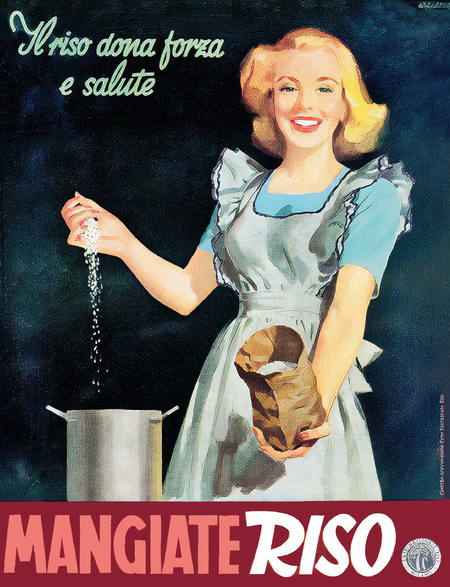
Why Risotto rather than spaghetti? Motivation is purely economical. To produce pasta, Italians are dependent on foreign markets. Their imports of durum wheat, mainly Russian and Turkish, went from 18 to 25 million quintals between 1911 and 1925. On the other hand, rice pushes well in the north of the country, especially in the plains of Piedmont and Lombardy. This is why, in order to ensure food self -sufficiency of the country, Mussolini sponsors the rice culture and makes its consumption compulsory in schools, hospitals and the army (moreover, the exhausting working conditions of rice fields will give birth to the famous “Bella Ciao” revolt).
Noodles to resist
The regime’s voice do the rest. Female magazines sing in their columns the nutritional (and patriotic) benefits of a white rice bowl. During fascist demonstrations, the government had bags of rice distributed, as well as detailed instructions to prepare it, the ricettariwhich are as much recipe books as propaganda manuals encouraging Italian women to birth. But if the fachos get into risotto, their detractors are resisting. “The angels in heaven eat nothing other than vermicelli al pomodoro (“Tomato vermicelli, editor’s note)»»retorts the mayor of Naples, where pasta has been produced from the XVe century, antipastists.
Indeed, in Italy of Mezzogiorno (The south of the country), rice struggles to democratize on the plates. Dark reminder of the deprivation of the Great War and the Pitance of the trenches, this is the food that is given to dogs. Local tradition always prefers pasta to him, even if it is necessary to be satisfied with a mixture of semolina and water which is embellished with a modest sauce or some vegetables in these times of shortages.
Benito Mussolini’s crusade will eventually go white. The Italians will continue, in the shadows, to eat pasta until the fall of the regime, in the summer of 1943. And this, even if the constraints of the war economy will have hardly worked the stomachs: the Italian people suffer from the lowest caloric ration in Western Europe with 930 calories per capita in 1943.
Nevertheless, the pasta will help bring the inhabitants out of their torpor, especially since the industry will prove to be a key factor in the post-war economic recovery. Nowadays, Italian and Italian still devour 23.5 kilos of pasta per capita each year … three times more than they consume rice. Would they have the same appetite if Mussolini had not been there?
