
For the past thirty years, they have been waiting to be in the place that comes back to them: on the screens of cinemas, especially in France. Remained unpublished since 1994 and 1996 respectively, apart from selections at festivals or as part of retrospectives, Confusion at Confucius And Mahjong have partially changed, without losing anything from their tonic, comical and critical energy.
But it took all this time to finally be recognized by the verve and the lucidity at the time in large part premonitory of their author, this immense filmmaker in the end of ultimately conquering the place which returns to him almost two decades years after his death. Edward Yang films (1947-2007), especially Yi yibut not only, now appear in many international rankings of the best films.
Yi yi Also comes in theaters, on August 6, in a magnificent restored version. This film, the last one that Edward Yang was able to make in 2000, had finally started to assert the start of the recognition that all his work has deserved since his first feature film in 1983. Within the latter, still largely to discover, the two titles that come out this Wednesday, July 16-Confusion at Confucius And Mahjongvery different from each other in many ways – However, have a number of common points.
A main character named Taipei
Like the whole work of Edward Yang, they have as a major character, omnipresent in various forms, the city of Taipei. In the early 1990s, it was much more than a city in the Chinese world.
It is an exceptional urban laboratory, where the coming world is brutal and enthusiastically, the XXIe globalized century. Other major Asian cities are experiencing a comparable development at the same time – Seoul, Hong Kong and Singapore -, but it is in Taiwan and not in South Korea, Hong Kong or Singapore that the filmmaker can see and tell it.
And this is what practically all its feature films do, all in the present, except the major work that preceded the two films that released on July 16, To Brightter Summer Day (1991),, who told the beginnings in the early 1960s. following him and more critical and did not do before Taipei Story (1985) And The Terrorizers(1986),
Confusion at Confucius And Mahjong Describe a city and a society, tearing away from a traditionalist universe, marked by the long dictatorship of the single party Kuomintang (“white terror”) and the fantasy of the reconquest of the Chinese continent after the defeat of the nationalists in 1949.
Brutally turning the page for this long period barely over (martial law was only abolished in 1987), the capital of Taiwan metamorphoses at full speed. It is the boom in the industries and services of the future, where IT and “new technologies” play a central role, which will make the fortune of what was then called “four Asian dragons”. This results in the transformation of buildings and the organization of neighborhoods, but above all human relationships, at work, in romantic relationships, in families, between generations.
From these changes, very connected to the international according to schemes prefiguring the globalization which is generalized at the turn of the 2000s, Edward Yang, imbued with Chinese culture but also a computer engineer formed in the United States and large connoisseur of the new European waves, sees forces and defects and invents cinematographic forms capable of accounting.
Yet, Confusion at Confucius And Mahjong are not descriptive and analytical films. One is a burlesque vaudeville, the other a dreamlike and sentimental thriller. And both, beyond the comic and sensuality-and thanks to them-are also two cries of anger. It is the intact power of each film to be deliberately disturbing, irreconcilated with what is then happening.
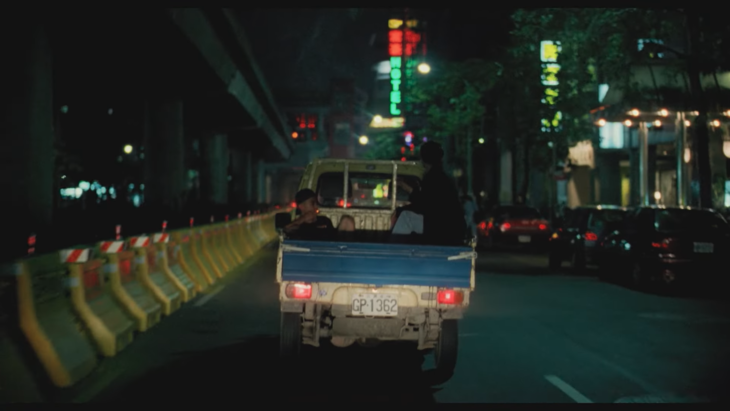
“Confusion in Confucius”, Soap Opera in vitriol
The first deliberately adopts the codes of a Soap Opera devoted to the loves and rivalries of young members of the emerging middle class in Taipei. Working in computer science or communication, but also culture, the multiple characters are taken in a maelström of affects, speeches, shadow games where burlesque and pathetic bounce on each other.
Chanted with aphorisms written in the screen, portrait with cruelty and humor the codes and things of each and everyone, Confusion at Confucius However, it is not just a denouncing charge. Several of his protagonists, especially female, are also looked at with a form of tenderness, attentive to let perceive the anxieties and the hopes which vibrate under the shells of conquering businesswomen.
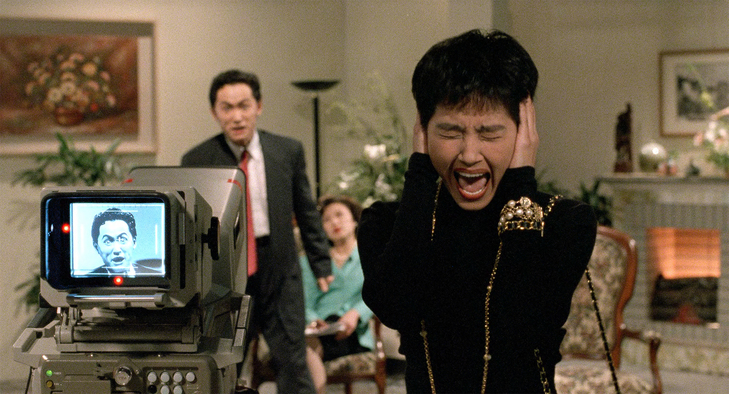
The plastic sense of Edward Yang is hosting moments of infinitely delicate suspense, of a confounding beauty, which work from the inside the vibrant material, saturated with lies and illusions, that kneaded by this electric human comedy. Much more than breaks or breaths, these moments of dreamy sweetness participate in the vigor of the composition and the rigor of a look where the art of caricature does not imply any simplism.
In the cataracts of sentences – which can be simultaneously hollow and double -meaning – and the disruption of relations between friends, between lover, between colleagues, a whole humanity seeks to find a meaning when their world has changed.
“Mahjong”, surprising series B
Just as brutal and moving – but in another register – is Mahjongmade two years later, in 1996. The film accompanied a gang of young men inhabited by a fun and predatory rage, which manifests itself in extortion, blackmail, more or less distressing combins and grip on young women manipulated.
Completely filmed at night in the streets, bars and Taipei apartments, explicitly placed under the signed an ideal of ultra rapid enrichment and lawless law, the wilderness of Red Fish, Little Buddha, Hong Kong and Luen-Luen unfolds around two extremely different abyss.
One is the unbearable vertigo for them of the collapse of links and relations disintegrated by “new society”, vis-à-vis parents and in relations to women-which will take vigorous revenge on their sad machismo.
The other is the presence of a foreigner, as opaque in their eyes as the world where she failed is for this Marthe, a young Frenchwoman to which Virginie Ledoyen gives a very moving-absence of inner grace, at the limits of an erotic and naive dream.
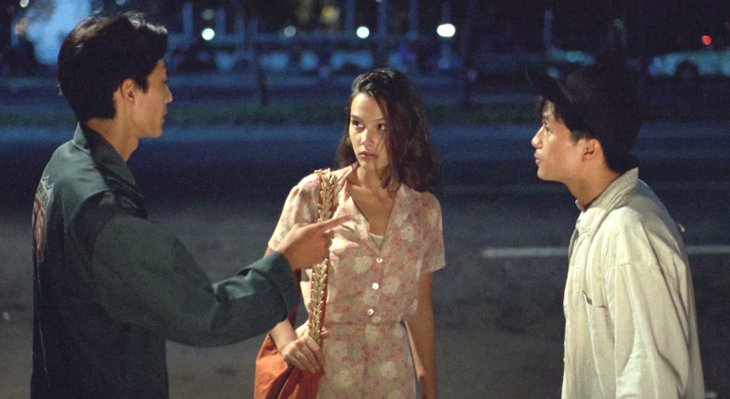
The multiple dynamics, full of gags and twists and turns, that this narrative device will experience many reversals, on the side of a comic strip burlesque, bursts of physical violence translating the untenable pressure which mismanages the cadors as the apparent victims and a delightful reversal of the definition of Marthe, of lady in distress in almost superhero.
These multiple swers, until the unexpected outcome, manifest the narrative virtuosity of Edward Yang, while the sequences are all impressive visual prowess. But beyond rhythm and graphic compositions, Mahjong is a surprising B series, to the best of what this apparent formal modesty can tell with momentum and sensitivity a world falling. Towards a present which is also ours.


