Washington -based American reflection group and research center based in Washington, the Pew Research Center led a survey of the opinions of the Americans about the foreign policy of Donald Trump, as the CAP of the first hundred days of his mandate (Tuesday April 29). Published on April 17, this survey makes it possible to measure the extent of their support-or of their rejection-vis-à-vis this foreign policy. Increase in customs duties, abandonment of certain programs, withdrawal from the Paris Agreement, positions on wars in the Gaza Strip and Ukraine … The subjects are numerous and they are divisive, including within the Republican electorate.
On the increase in customs duties towards China, only a quarter of voters expect positive effects of this measure for the United States (Table 1). Republican voters are much more likely to share this opinion, but the fact that less than half of them expect positive effects reflects the deep disorder of this electorate. This disorder is even deeper when it is no longer the country but their personal situation: only 17% expect positive effects and 30% of the negative effects.
Table 1. The effects of the increase in customs duties to China
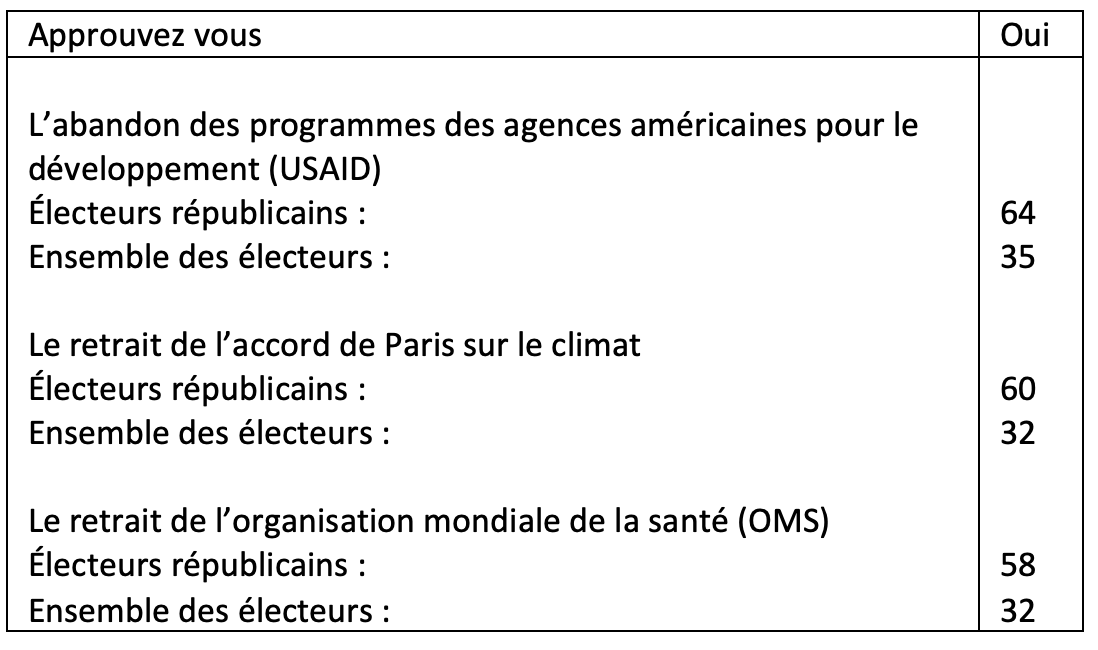
The same goes for abandoning the programs of the United States Agency for International Development (USAID), as well as the withdrawal of the Paris Climate Agreement (adopted in 2015) and the World Health Organization (Table 2). If only a third of American voters approve these decisions, republican voters are less than two -thirds to share this opinion.
Table 2. Abandonment of USAID programs and the withdrawal of the Paris Climate Agreement and the World Health Organization
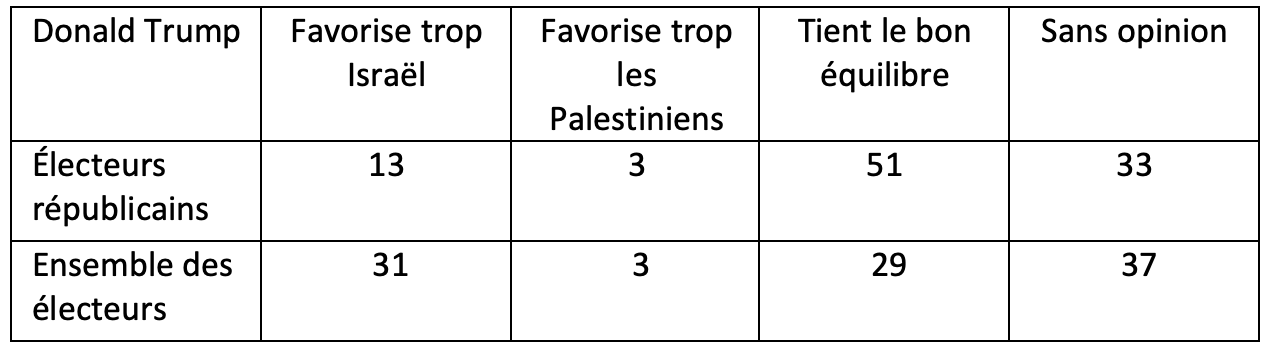
About the two wars where the United States is engaged in negotiations to end it, in Ukraine and the Gaza Strip, only half of the Republican voters believe that their country holds the right balance between the protagonists (Tables 3 and 4). Note also, with regard to the war in Ukraine, that this electorate is isolated: only 16% believe that the United States favors Russia too much, against 43% of the entire electorate.
Table 3. Donald Trump, Russia and Ukraine
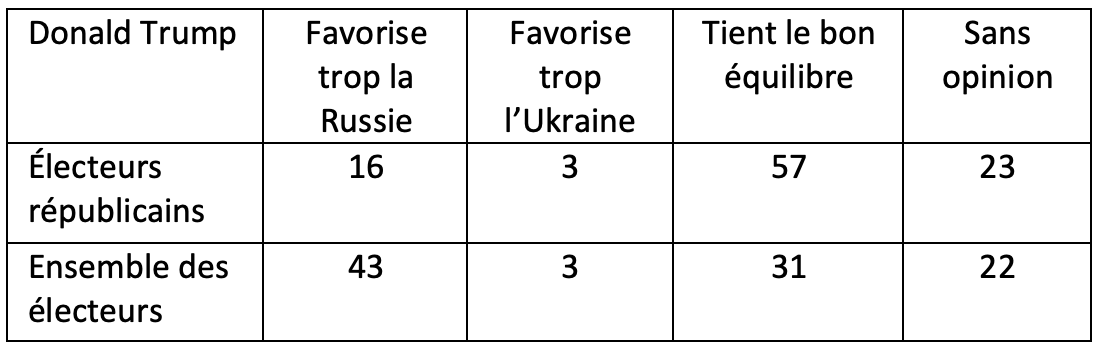
Table 4. Donald Trump, Israel and Palestine
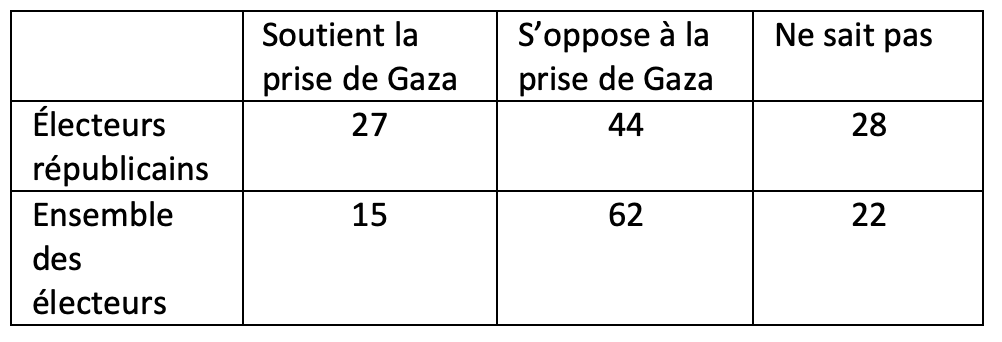
Regarding the two Trumpist projects to seize Greenland and the Gaza Strip, less than half of the republican voters support the annexation of Greenland and a relative majority opposes the taking of the Palestinian enclave. As for the entire electorate, it is clearly hostile to these two projects (Tables 5 and 6).
Table 5. Greenland’s catch
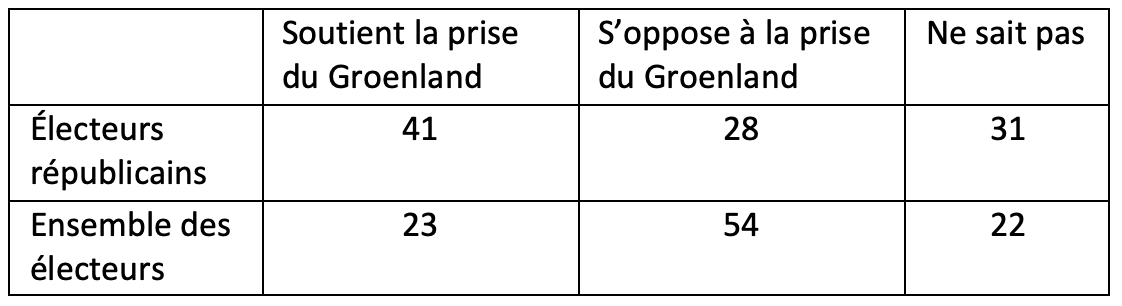
Table 6. Taking the Gaza Strip
These data emerge from two major conclusions. On the one hand, the Republican electorate is isolated throughout an American electorate, which mainly rejects the foreign policy of the President of the United States. On the other hand, the Republican electorate himself is very shared on this policy and his responses reflect a deep disorder. The fact that only 17% expects for them good effects of customs rights policy towards China shows the fragility of the support of this electorate to Donald Trump in the field of foreign policy.