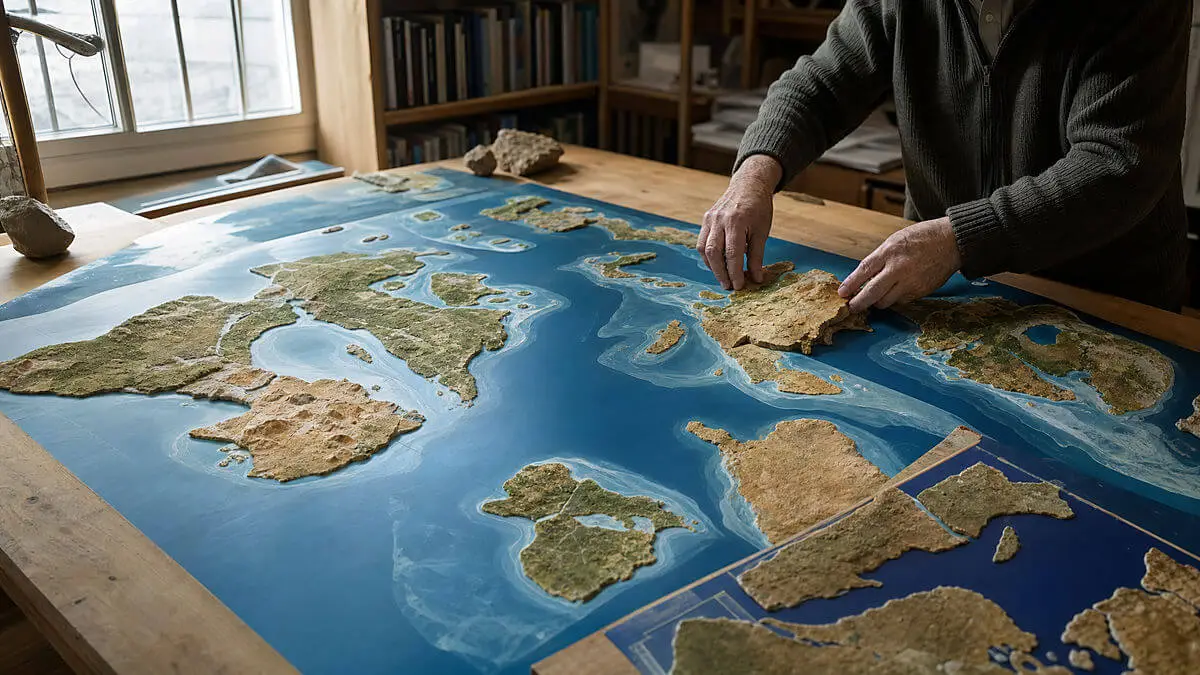
Imagine trying to reconstruct the history of an entire continent by reading only the newspapers of three cities. Something similar happens with the prehistoric marine life that populated the seas of the past: we know it from a deeply unequal geographical sample. New work has mapped those gaps and poses an uncomfortable question: What chapters of marine evolution are we still unread because we haven’t yet looked—or haven’t been able to look—in the right places?
A treasure map that, in reality, is a map of our emptiness
The study, titled Staking out the frontiers: The limits of the metazoan shallow marine fossil recordpublished in Science Advancesdoes not analyze all prehistoric life: it focuses on fossils from shallow seas, the so-called shallow-water metazoans, over some 540 million yearsfrom the early Cambrian to the most recent Pleistocene. Plants, non-animal organisms and, in general, the most recent deposits of the Holocene are left out.
To do so, the authors gathered 148,960 georeferenced fossil collections coming from already published records. It is important to clarify what a fossil collection is: it is a sampling unit, a set of remains collected at a specific point and time. It is not equivalent to a species or a single specimen. They then projected these collections onto reconstructions of ancient seas and arranged them into hexagonal cells of equal surface area, testing different sizes and orientations of the grid to check that the patterns did not depend on a single way of dividing space.
The fact that forces us to stop: only one in ten cells has information
Here appears the figure that gives meaning to all the work. On average, only 10.7% of map cells overlapping ancient shallow seas contain recorded fossil information. In other words: of every ten portions of the map where there was once a shallow sea, nine appear blank in the analyzed database.
It’s tempting to read that 10.7% as “we’ve lost 90% of past marine life,” but it doesn’t mean that. The figure measures geographic coverage of the marine fossil record, not the proportion of known species or the number of fossils studied. What it reveals is the extent to which the available evidence is concentrated in a few well-worked regions and leaves huge areas with hardly any data.
Absence of registration is not absence of life
This is the key distinction of the entire story. An empty cell does not prove that there were no marine animals there. It only indicates that the study did not find valid fossil information in the database for that place and that period. The difference between absence of registration and absence of life It is the key to correctly interpret the results.
The reasons for a gap can be very varied. Sometimes exploration is lacking, simply because no one has searched there with sufficient means. But other times the suitable rocks are buried under more modern sediments, have been eroded and no longer exist, or are inaccessible. Conservation conditions also influence: some environments preserve the remains very poorly. And there is a purely administrative cause: data that exists, but has not yet been published or digitized in international repositories. Converting an empty cell into a real biological absence would require independent evidence, such as appropriate rocks, repeated sampling, and comparable preservation conditions.
Added to this is that the ocean of the past does not coincide with today’s map. Continents that are now separated could have been part of the same marine platform, and currently terrestrial areas were underwater. That’s why looking for gaps requires first reconstructing the paleogeography before deciding where information is missing.
A bias that also has a social map
The imbalance is not just a matter of geology. The authors point out that around 97% of the occurrence data analyzed comes from researchers in high- or upper-middle-income countries. It is a fact that moves the problem from the field to the laboratory and to financing.
This pattern may reflect structural differences: economic resources, scientific infrastructure, access to collections, institutional stability, and the ability to publish or digitize findings. The consequence is that regions with long paleontological traditions—with active museums, roads, quarries, and teams capable of recording what they find—tend to be overrepresented. And that can make certain evolutionary episodes seem more abundant or better documented than they really were. The history of marine life depends, in part, on who can study it.
What the map does and what it doesn’t do
At this point, it is important to be precise with the “treasure map” metaphor. The study compared unrecorded areas with geological maps to distinguish between simply empty areas and areas that also appear to contain geologically accessible shallow deposits. The latter are what the work proposes as priorities for future campaigns.
But priority is not synonymous with discovery. The fossil map It does not identify new sites, it does not confirm that there are unknown species in the indicated areas and it does not demonstrate the existence of fossils in any specific coordinates.. Its function is more humble and, at the same time, more valuable: to show where the available evidence is weakest. It is a guide to where to look, not a promise of what will be found.
Does this mean that the marine evolution we know is false?
No. And this nuance is important so as not to overinterpret the work. Available fossils continue to offer real evidence of how life evolved in the seas. What the study warns is that its distribution is not a neutral sample of all oceans and all times: it is filtered by where it has been searched, what is preserved and who has been able to publish.
That opens a range of scenarios for the future. A new campaign in one of these poorly sampled areas could reinforce an existing interpretation, qualify it or, in the best of cases, bring to light an evolutionary transition that has until now been poorly documented. Nor would all groups or all periods react the same: the impact of new sampling depends on the quality of the strata, the preservation and the history of the group studied. The bias, furthermore, is not only geographical; It is also temporal, taxonomic and taphonomic, because certain organisms have more resistant bodies and some environments preserve better than others.
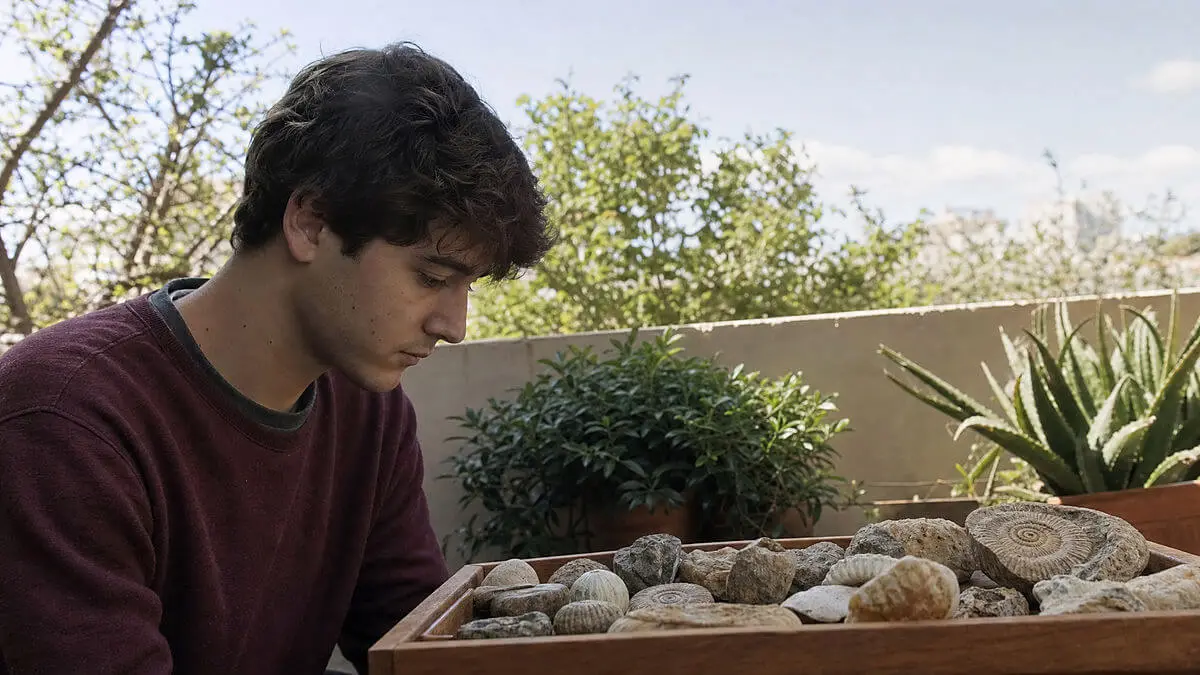
The next time you read an organized story about the evolution of the seas, it is worth remembering that 10.7%. We do not know past marine life from a balanced sampling of the planet, but from a very specific fraction of the board. Improving international collaboration, local training, access to collections, and digitization could expand that record without needing to uncover entire fossil continents. The work leaves open a fundamental question: how much of what we think we know simply depends on where we have been able to look.
Overall, the work makes it clear that the regions with the greatest coverage in marine paleontology coincide with areas of long scientific tradition, mainly in Europe and North America, while large areas of Africa, Asia and the southern hemisphere, together with certain deep intervals of the Paleozoic, concentrate the main gaps on the map. It is precisely these gaps that mark where the next generation of exploration should advance.