
About 252 million years ago, the planet was on the verge of becoming lifeless. The end-Permian extinction event, known as the Great Dying, wiped out most of the known species of the time. The interesting question is not whether anything was left alive, because we know it was. The question is another: what type of vegetation managed to persist when heat and drought transformed the world, and at what cost did it do so? Identifying these surviving plants from the Permian is, precisely, the objective of the study that we review below.
A planet that is emptied of life
The Permian-Triassic crisis is the largest extinction documented in the fossil record. It was not an instantaneous episode, but a cascade of environmental changes that devastated much of the marine and terrestrial biodiversity. Among this disaster there is a specific question that a group of researchers has tried to answer by looking at the soil, at the plants. It is worth clarifying from the beginning: what follows offers clues about plant resistance, not a forecast about what will happen to current ecosystems.
What 485 lycopodium fossils tell us
A study published in Nature Ecology & Evolution analyzed 485 samples of lycopodia, both fossils and extant. Lycopodia are a very ancient plant lineage, today represented by discreet plants with a mossy appearance, but with an evolutionary history that goes back much further than that of flowering plants. Working with this group of fossil lycopodia makes it possible to trace the same type of plant over hundreds of millions of years.
What is striking comes when crossing these fossils with climate models from the past. According to these reconstructions, some lycopodia would have lived in regions with average maximum daily temperatures higher than 40°Cand with patterned peaks that reach between 45 and 65 °C. These are extreme figures, far above what most current plants tolerate. Now, an important nuance: these data describe the environment in which these vegetables lived, they do not explain on their own how they managed to withstand it. It is one thing to reconstruct the thermometer of a time and another, quite another, to understand the biological mechanism that allowed it to endure.
What is data and what is hypothesis: The 485 fossils analyzed and the temperature reconstructions constitute the direct evidence of the study: we know where and when these lycopodia lived, and what climatic conditions they endured according to the models. Instead, the explanation of as What they did—CAM photosynthesis described below—is a reasoned interpretation of that data, not a finding directly observed in the fossil record. It is advisable not to mix both planes when assessing the solidity of the conclusion.
The CAM hypothesis: a strategy to avoid losing water
Here comes the most speculative part, and the one that should be read with caution. The authors propose that certain lycopodia could resort to a type of photosynthesis known as camfor its acronym in English (crassulaceae acid metabolism). What does that mean in everyday language?
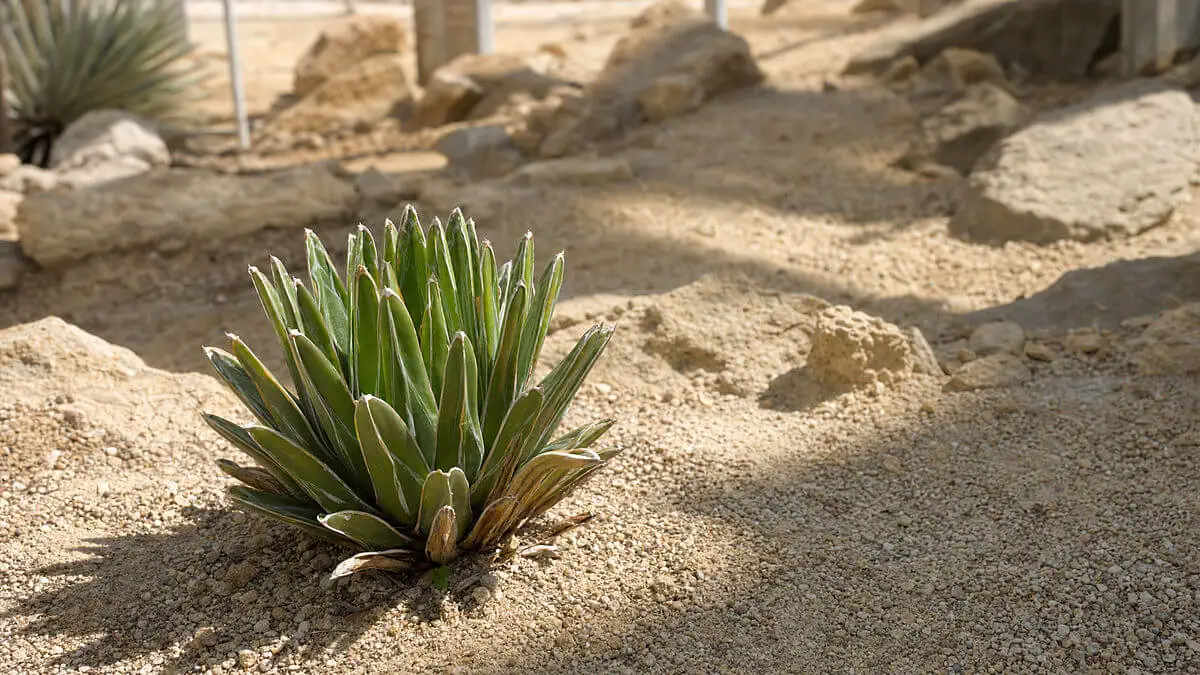
Most plants open microscopic pores called stomata during the day to capture carbon dioxide. The problem is that, when opened with heat, they lose a lot of water through evaporation. Plants with CAM photosynthesis reverse the schedule: they keep those pores closed during the day and open them at night, when it is cooler and water loss is less. They store the captured carbon and process it in the light of the next day. It is the strategy used today by cactus and tropical pineapples, plants adapted to dry or resource-limited environments.
If some Permian lycopodia had functioned this way, it would be better understood how they persisted in such hot environments. But here is the key limit: the fossil evidence is compatible With that hypothesis, they do not prove it. We do not have a plant from 252 million years ago to measure nocturnal respiration. This is a reasonable proposal about CAM photosynthesis in plants, built on indirect clues, not established fact. Distinguishing that nuance matters, because it depends on how much weight we can give to the conclusion.
Surviving is not the same as thriving
Even if the CAM hypothesis were confirmed one day, there is one point that the past makes very clear: just because a lineage resists does not mean that the entire ecosystem is saved. And this is, perhaps, the most useful lesson of the episode.
After the Great Dying, the vegetation did not completely disappear, but it changed profoundly. The diverse and complex forests of the Permian gave way to much simpler plant communities, with less variety of species and poorer structures. Ecological recovery was not measured in centuries or millennia, but spanned millions of years. Persisting, in that context, was not the same as rebuilding.
That distinction dismantles a tempting reading of the discovery. It’s easy to conclude that if some plants can withstand 65°C, then plant life is basically indestructible. But a handful of resistant lineages alone do not recompose a rainforest, a temperate forest, or a network of interdependent species. The survival of a few coexists perfectly with the collapse of the biological wealth of the whole.
Current signs of water stress in plants
Transferring all this to the present requires caution. The study does not predict what will happen to current vegetation, and treating it as a crystal ball would be a mistake. What it does offer is a way of looking: separating the persistence of some lineages from the health of entire ecosystems.
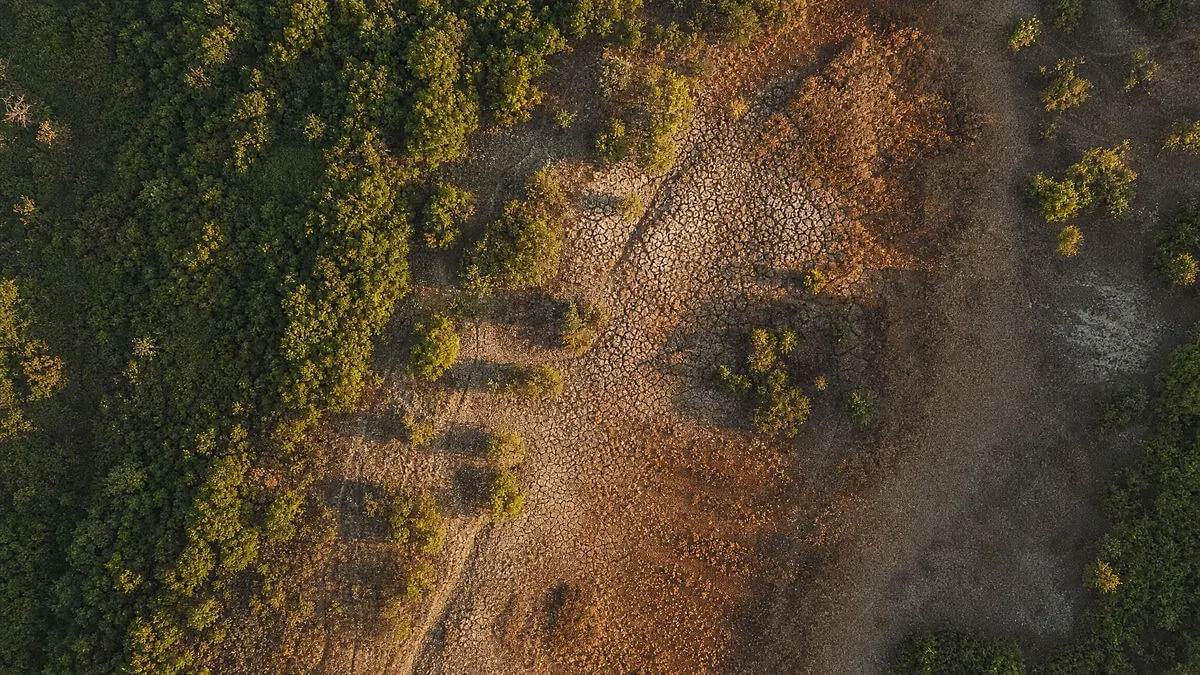
Today there are observable signals that we can measure, and that illustrate well the relationship between plants and climate change. Water stress – the difficulty of plants obtaining enough water – is already recorded in many regions. Changes are also detected in the distribution of plant species, which tend to move towards cooler latitudes or altitudes when the local climate becomes adverse. And there is the loss of habitat, which fragments and reduces the available spaces.
There is a decisive difference with the remote past. The transformation that followed the Great Dying unfolded over millions of years. Current changes in climate and land use are measured in decades. Such a narrow time frame drastically reduces the adaptation opportunities of many species. That is why it makes sense to ask which ecosystems could be transformed first: arid areas, already at the limit of water availability, and highly diverse forests, where the loss of a few key species can trigger chain effects, are among the most exposed.
What question does the past leave open?
The value of this type of research is not in reassuring us or scaring us, but in refining the question. Science distinguishes between two phrases that sound similar but mean very different things: “some vegetation persists” and “the ecosystem is maintained.” The first describes survivors; the second, to a functional system with its diversity and relationships intact.
That difference guides specific conservation decisions. If we want to anticipate transformations, we need to monitor measurable indicators: the available humidity, the diversity of species in each area and changes in their distribution. It is data that allows action before a complex ecosystem is simplified, not after.
The deep past does not tell us that today’s plants will be saved or disappear. Rather, it leaves an open and rather uncomfortable question: when we know that the persistence of a few lineages can coexist with the impoverishment of everything else, what are we willing to protect before heat and drought reduce the variety of the ecosystems we still preserve?
References:
-
Xu, Z., Hilton, J., Yu, J. et al. CAM photosynthesis may have conferred an advantage during the Permian–Triassic mass extinction event. Nat Ecol Evol 10997–1010 (2026). DOI: 10.1038/s41559-026-03026-0