
Until now we had never had so much information. However, there is the paradox that we can end up locked in very narrow information universes.
The expansion of the web has multiplied the possibilities of accessing information, but that does not allow fools to be quantified. If we are more foolish than before, how has a quality so negative for the survival of the species evolved?
Some say that we are born naive, although this is not entirely true. In nature, not everything is trustworthy, so many living beings have defensive strategies from birth. One of the most common is in the facial features of newborns: Even baby lions awaken a certain tenderness in usand not by chance.
Certain shapes, such as round ears and eyes, inhibit violence and can protect defenseless creatures from possible attacks, although they do not always succeed. Doll and cartoon designers take advantage of these traits, as shown by Mickey Mouse and The lion king.
Ignorance is also part of adaptation
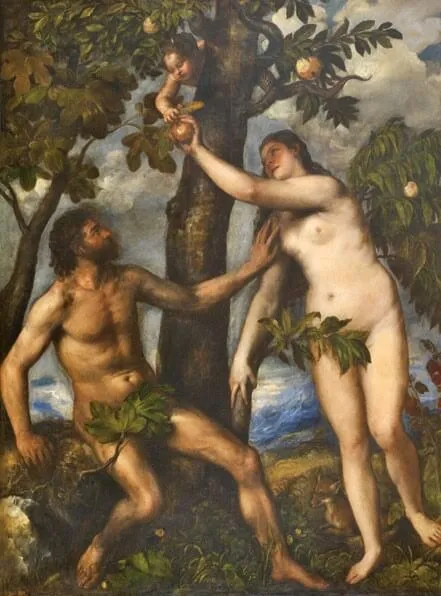
Adam and Eve were deceived by the serpent. It is assumed that the first humanity was innocent; Don’t some say that ignorance is bliss? It is not strange that an animal as ancient as the snake deceived the first humans so easily: the devil knows more because he is old than because he is a devil.
The biblical stories were not wrong. A plant, like the Venus flytrap, can fool an insect. Is the insect stupider than the plant? Stupidity is an intraspecific game and certainly has to do with ignorance.
According to agnotology scholars Robert Proctor and Londa Schiebinger, we live in an age of ignorance. How can this state occur in a world whose technology does not stop growing? And, as Nancy Tuana suggests, why has what was once knowledge been erased from the face of the Earth?
The first question can be answered with logic: technical knowledge advances very quickly, perhaps too quickly, and we are adapting to the pace of new media. Young people are the first to do it. Adolescence is a time to make mistakes; For this reason, its protagonists fall again and again into the tricks, hoaxes and traps of the web.
The formula is simple: the more knowledge we accumulate, the more the danger of ignorance in a species increases. We need to prolong our learning stage to adapt to technological evolution, and the only way to do this is by making mistakes. Right now there is a tremendous mismatch between the biological and technological rhythms. When both meet, in the near future, an important step will be taken in our cultural evolution.
When both meet, in the near future, an important step will be taken in our cultural evolution.
The knowledge we left behind
The second question derives from the first. To move forward, we usually leave behind other knowledge that we now consider useless. Who today knows how to make a fire or carve a Levallois flake?
Neanderthals’ knowledge of nature went hand in hand with their sensory abilities. We have left behind a sensitivity adapted to the natural environment and have replaced it with another made in the image and likeness of urban environments.
A young Neanderthal had to know the species of plants and animals in a very different way from what is taught in school, because his survival depended on it. On the other hand, a schooled child is far below a Neanderthal in manual and locomotor skills: he concentrates his ability on assimilating new technological challenges.
Today’s young people have to fight against viral predators and, at the same time, they may leave ancestral evolutionary qualities undeveloped: smell, tactile experience, the manufacture of objects or the bodily techniques of sleep. City children are, as Rebecca Solnit says, nature illiterate.

Speed is not always an advantage
Nature is read like a book: any child from a hunter-gatherer society knows how to interpret it. Does that make us ignorant? If stupidity is the lack of something, how do we measure whether that something is good or bad for different species?
Stupidity evolves because it is nothing more than a process of adaptive readjustment to certain contexts. Sloths, for example, are often considered stupid because they move so slowly. Your metabolism has adapted to a rhythm absolutely opposite to that imposed by current technology.
For Lucy Cooke, speed is overrated in nature. The sloth adopted a different strategy and did well: it is an ancient species that is not extinct. Furthermore, it could be said that Its slowness has been one of the causes of its success.
What’s more, it could be said that its slowness has been one of the causes of its success.
Natural selection has favored this seemingly stupid behavior. The proverbial slowness of the sloth prevents it from fleeing from any predator, but, without a doubt, it also has other advantages. If we compare their pace of life with that of the hummingbird, it seems that they live in opposite temporal dimensions.
To the hummingbird, the sloth would be almost a rock; and the sloth is probably not even aware of the existence of such a fast bird. Some flies, whose life span lasts almost a single day, see us as if we were moving in slow motion.
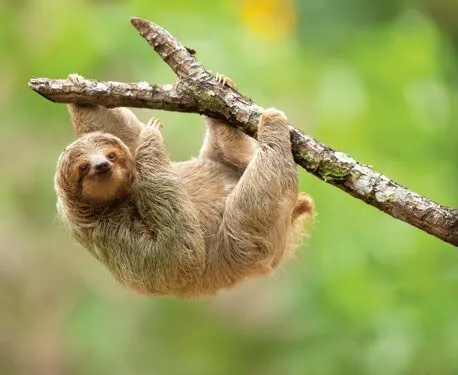
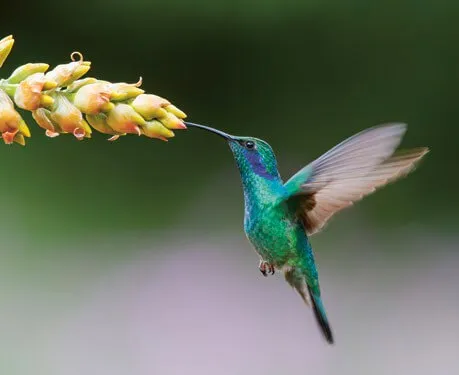
The temporal aspect has gone unnoticed in the evolutionary framework. Metabolisms and perceptions of time are adaptations that shape different rhythms of life. Some birds of prey can hunt hummingbirds; The ability to perceive the slow movements of a sloth depends on each species. These evolutionary strategies resemble the temporal dimensions of science fiction.
A civilization that rewards speed
A new civilization is underway and it is more like that of the hummingbird than that of the sloth. That’s why no one considers the hummingbird stupid but the sloth does. It is nothing more than a prejudice: in our society we praise the fastest car and cell phones with powerful processors. Slowness seems like a thing of dinosaurs.
but the mind sapiens He tries to adapt to the speed of computers and leaves behind ancestral thought processes, although he was born in a slower natural environment.
The frenetic pace heralds the era of performance and the uselessness of reflectionas well as the superficial repetition of emotions. In short, it announces a population of operators who manipulate machines, they barely have to do anything, much less think.
If stupidity evolves, it is undoubtedly thanks to our species, possibly also due to the influence of artificial selection that modifies and alters our natural inheritance.
