
Radon present in rocks and soil can travel through their pores and cracks until it reaches homes. The question is how it manages to penetrate our homes and buildings, and what allows it to accumulate inside.
There is a map of Spain that doesn’t look much like the ones we are used to seeing. It does not show roads, rivers or administrative borders, but rather the areas where the air in homes is most likely to contain a radioactive gas. The most extensive patches appear in Galicia, Extremadura, western Castilla y León and the mountains of Madrid. They all have something in common: beneath their towns and cities there are rocks that produce radon.
Radon is generated naturally by the decay of uranium present in rocks and soils. It is not a pollutant produced by industry or a consequence of nuclear energy: it has been forming on Earth for millions of years.
The problem arises when the gas emanating from underground finds a house above it. It can move through the pores and cracks of the ground and enter buildings through fissures, joints, pipe passages or any other means of communication with the ground. Once inside, it can accumulate.
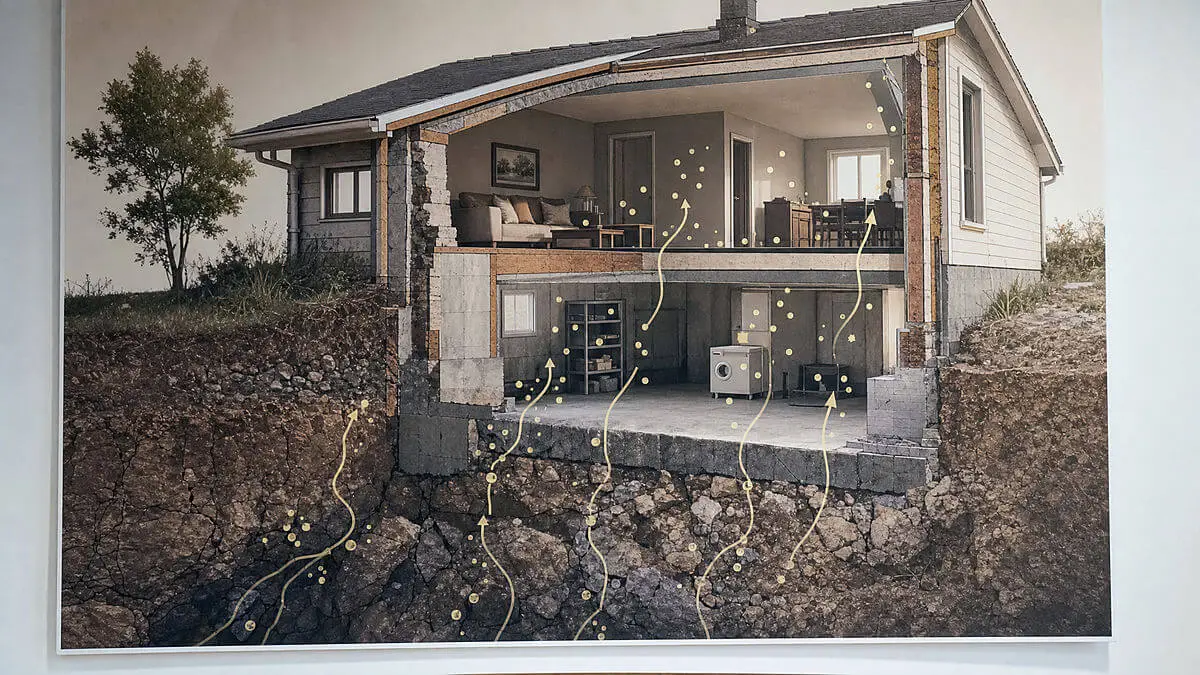
What the radon potential map reveals
The answer lies, to a large extent, in geology. According to the Nuclear Safety Council’s radon potential map, approximately 70% of Galicia’s surface is found in areas whose potential exceeds 300 Bq/m³, the reference level that the EU has taken to act. In Extremadura, the percentage reaches 47% and in the Community of Madrid, 36%.
But that 70% does not mean that seven out of ten Galician homes exceed 300 Bq/m³. The map identifies territories where high values are most likely to be found; To know how much radon there is in a specific house, you have to measure it.
Galicia is the place where we can best verify this. The Galicia Radon Laboratory, at the University of Santiago de Compostela, has been studying the concentration of this gas in homes since 2001. Its map, updated in 2025, already includes 6,080 measurements.
In all the homes studied, 18% exceeded 300 Bq/m³. In the province of Ourense, the proportion reached 23%.
Radon can also reach tall plants
Living off the ground can reduce exposure, but it is not always enough to get rid of the problem. In the Galician study, the geometric average was 289 Bq/m³ in the basements and dropped to 89 Bq/m³ in homes located on the fifth floor or higher.
However, 14% of second-story homes also exceeded 300 Bq/m³. The same happened in 7% of those located on the fifth floor or higher. As it is a gas, radon can move through the interior of buildings: Height reduces exposure, but does not eliminate it.
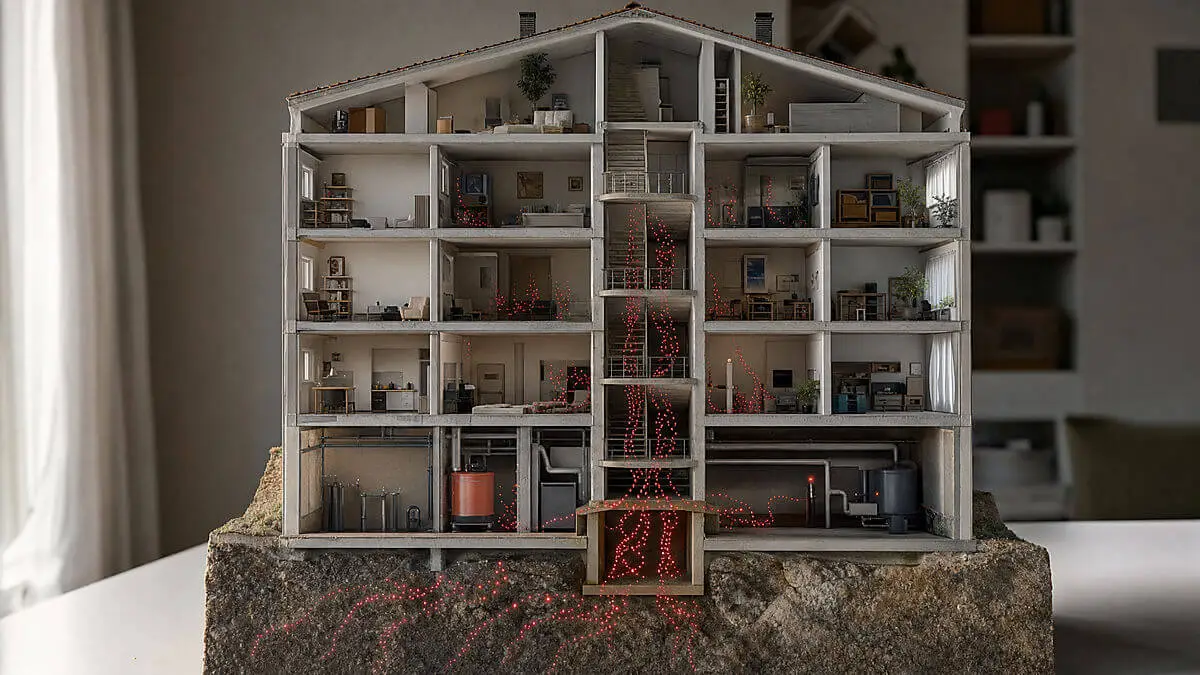
That is why it is no longer considered a problem exclusive to mines, caves or basements. A study published in 2023 analyzed 3,140 workplaces in Spain and found concentrations greater than 300 Bq/m³ in 623 of them, approximately one in five.
As expected, the values were higher in radon-prone areas. But the most striking result appeared when comparing the labor sectors: The highest concentrations were found in education and culture, which includes schools, universities, libraries and cultural centers. In these buildings, the concentration of radon was 6.5 times higher than that recorded in bank offices.
The building also influences the accumulation
Radon increases the risk of lung cancer. The European study cited in the text estimated a 16% increase in relative risk for each additional 100 Bq/m³ of average exposure. In Spain, the estimates cited attribute 3.8% of lung cancer deaths to radon, a proportion that reaches around 7% in Galicia and Extremadura.
But the soil doesn’t tell the whole story. If 14% of second-story homes can exceed 300 Bq/m³, between the rock that produces radon and the air we breathe there must be another protagonist: the building. Its construction, cracks, ducts and, above all, ventilation can determine how much gas ends up accumulating inside.
The soil is the main source, but not the only one. Radon can also travel dissolved in the water of some aquifers and then be released into the air when we turn on a tap or take a shower.
A study in Finland showed that radon concentrations were three times higher in kitchens and 40 times higher in the living room. For their part, Canadian scientists observed that radon in bathroom air increased rapidly after a 10-minute warm shower. Once finished, we had to wait more than an hour and a half for the concentration to return to initial levels.
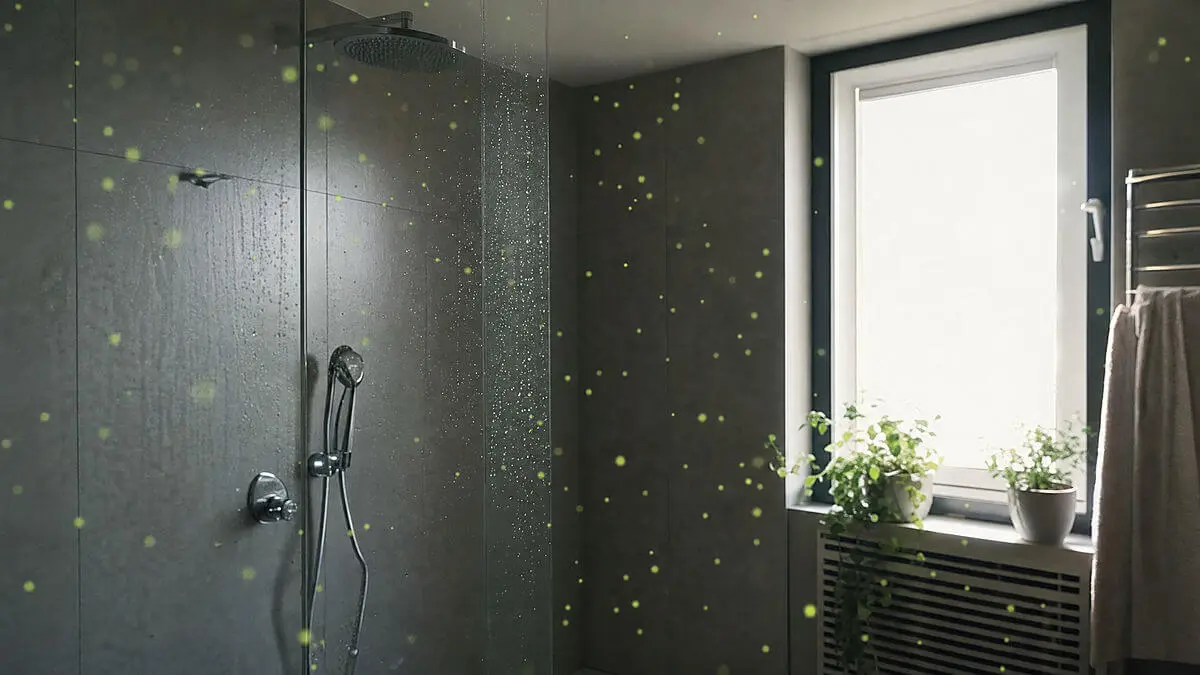
Once finished, we had to wait more than an hour and a half for the concentration to return to initial levels.
A natural gas that can be trapped at home
A house can protect us from the cold, rain and wind and, at the same time, become a trap for a gas coming from the ground. The same construction that protects us from the outside can reduce air renewal and allow radon to accumulate.
The most curious thing is that radon is not a recent enemy. It is not a consequence of atmospheric pollution, a nuclear power plant or industrial activity: it has been emanating from the rocks for millions of years.
What has changed is us. We have built buildings on these rocks and created spaces where radon can enter from underground and accumulate when ventilation is not sufficient.
Galicia has not become radioactive, nor has Extremadura or the mountains of Madrid. Granite is not our enemy, and the uranium contained in rocks has been part of nature since long before humans existed. Radon will continue to emanate from the stones. The question is how much we let it into our homes.
The question is how much we let it into our homes.
