
Science shows that our body is extraordinarily prepared to run long distances. Human beings are exceptional in this capacity and, according to the most accepted hypothesis, the first members of the genus Homo used it to hunt through persistence.
Evolution provided us with numerous characteristics that make us efficient when running. The shape of our body points in that direction: We are not made to be the fastest, but to resist. But why did evolution prepare us for millions of years to run long distances if today many health problems are related to a sedentary lifestyle? In essence, we are a high-performance machine dedicated to office tasks.
The quick answer is: to hunt. From the comfort of home or on the way to work, it may be hard to imagine why someone would need to run for hours and dozens of kilometers to get hold of prey. But hunting as we know it today—shooting from afar with a firearm or bow and arrow—is a far cry from the methods of early humans.
Experts believe that the characteristics that allow us to run long distances appeared with Homo erectus, about two million years ago. The bow and arrow are “only” about 70,000 years old. Previously, an effective way to hunt was to run the prey until they were exhausted. Almost all of them are faster than us, but they can’t maintain that speed for long. The energy efficiency of our body allows us to pursue them with exceptional persistence.
A body prepared for resistance
Human resistance is a unique trait in nature. Our body evolved to travel long distances and to use sweating as an efficient cooling system.something that differentiates us from other mammals.
No animal is capable of running as well or as far as humans!
“The most convincing hypothesis to explain these capabilities is that early Homo used persistence hunting to capture large animals millions of years before we invented the bow and arrow or other weapons,” added Lieberman, who has been studying the subject for more than 20 years and has written several scientific articles and books on the subject.
Endurance running was crucial in the evolution of Homo sapiens. The human body has the anatomical and physiological elements necessary to move at a good pace for a long time. Its shape is difficult to explain from an evolutionary point of view; To date, the most likely explanation is that we evolved to run.
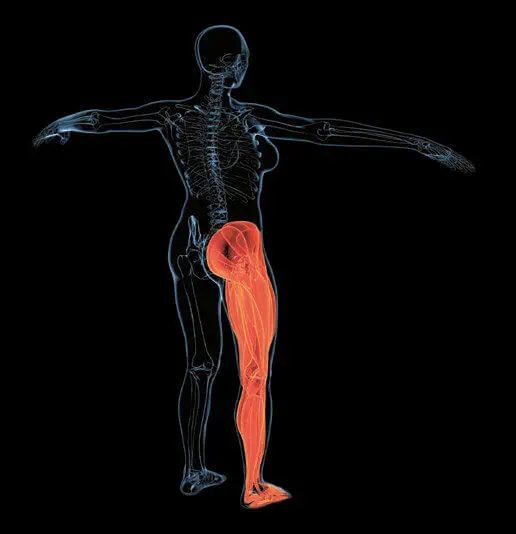
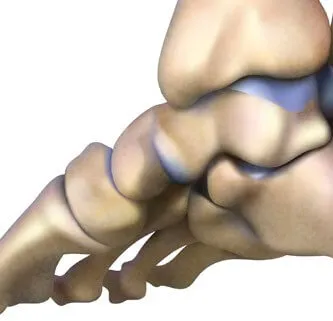
Some of our features are too useful for running to explain just by walking. Among them are the long Achilles tendon and the plantar arches, which They act like springs and help recover energy; elongated lower extremities, which optimize the stride, and a highly developed gluteus maximus, which stabilizes the torso against impact forces. Added to this is an exceptional cooling system.
Many mammals surpass humans in sprinting, that is, running at maximum speed for a short period of time. The cheetah reaches 120 kilometers per hour and the fastest dogs reach 50. On the other hand, the maximum speed of a top athlete in the 100 meter dash is barely 36 kilometers per hour.
Sprinting can only be sustained for a short time: the effort raises the body temperature above 40°C. All animals, including humans, stop running when they reach that temperature; If they persist, they may die. The human cooling system, however, is very efficient: we have bare skin, abundant sweat glands, and breathing that is uncoupled from walking. This way we dissipate metabolic heat and maintain sustained aerobic rhythms.

That’s why humans outperform most mammals in endurance racing. As Bramble and Lieberman point out, our bodies are adapted to use energy efficiently, control temperature, and maintain body stability during the complex movements of running.

The clues that investigators found
In the 1980s, David Carrier was the first to suggest that endurance racing could have influenced human evolution. He was a marathon runner and had studied in the laboratory of evolutionary biologist Dennis Bramble, who investigated the physical apparatus of different animals when running, including humans.
One of Carrier and Bramble’s first observations was our ability to regulate body temperature. For any animal, overheating can be fatal. Most mammals that run a lot, such as wild dogs, pant and sweat through their mouths to cool themselves. We, however, We have thousands of sweat glands spread throughout our body and we lack body hair.two traits that help regulate internal temperature.
The way animals manage heat during exercise influences their performance. Panting has one drawback: it interferes with breathing and reduces its efficiency. Therefore, although many animals are extremely fast over short distances, they do not excel in endurance tests.
In humans, the strategy is different. During running, the decoupling between breathing and walking helps dissipate metabolic heat and allows sustained aerobic rhythms to be maintained. Profuse sweating and bare skin also help regulate body temperature.
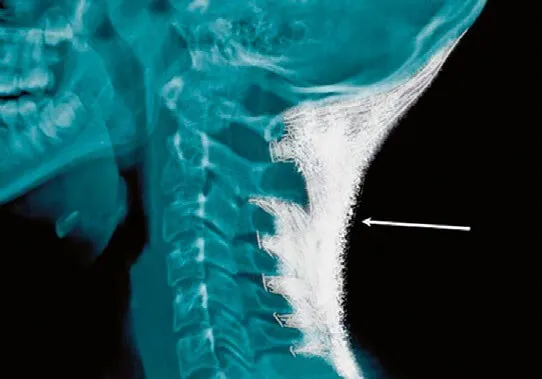
Bramble and Daniel Lieberman began working together several years later. They were looking for a key feature in the fossils of our ancestors from millions of years ago: a tendon that helps keep the head stable when running. Good runners have it among mammals, such as horses, dogs and rabbits, as well as humans.
It’s called the nuchal ligament, and luckily for fossil analysis, it leaves a mark on the bone: a thin ridge. Without this ligament, neck mobility could cause the head to move uncontrollably during running. In humans, the structure extends from the base of the skull to the seventh cervical vertebra and It keeps your head aligned, allowing you to run with your eyes forward without losing your balance.
Bramble and Lieberman found evidence of this ligament in the skulls of some of the first members of the genus Homo: Homo erectus, from about two million years ago. They identified some 26 characteristics that suggest that our body evolved to run. They presented their findings in an article now famous among paleoanthropologists, published in the journal Nature in 2004.

Persistence hunting: exhausting prey
How did these traits help when hunting? They made it possible to maintain sustained aerobic rhythms and exhaust faster prey, but less efficient at regulating their temperature. This technique is known as persistence hunting.
Today it is rarely used by hunter-gatherers, because it is rarely more efficient than firing a gun from a distance. However, a study by Bruce Winterhalder and Eugène Morin showed that it was more common than previously thought, even among hunter-gatherers in historical times. The article was published in 2025.

Eugène Morin, an archaeologist at Trent University in Canada, said: “We found extensive evidence that this method was a common way of obtaining prey globally.” And he added: «In some regions, it gained seasonal importance. For example, in high latitudes during winter or during summer in low latitudes. In contexts of cold temperatures but without snow, it was probably not practiced very frequently.
“Simply put, persistence hunting involves pursuing an animal until it is too exhausted to continue fleeing. The idea is to cause the animal to overheat by not allowing it enough time to regain strength and cool down. “Humans sweat profusely compared to other animals and, as a result, we are more efficient at dissipating accumulated metabolic heat,” explains Morin.
For the archaeologist, “the energetic cost of running is not high for humans. It is for those people who rarely run. Regular long-distance runners are extremely efficient. “Compared to the large amount of calories gained from shooting down big game, the amount of calories expended in the chase is very small.”
A chase of several hours involves an energy expenditure of between 2,000 and 3,000 calories. On the other hand, prey can provide between 15,000 and 50,000 calories, depending on the animal. So, a small group of hunters could provide food for the entire community.
A chase of several hours involves an energy expenditure of between 2,000 and 3,000 calories. On the other hand, prey can provide between 15,000 and 50,000 calories, depending on the animal.
Are we maladjusted today?
Reading this, an office worker might think that they lead a lifestyle far from the direction that evolution set for two million years. And you would be right.
Sedentary lifestyle is considered a silent pandemic and a critical global public health problem. However, as Lieberman commented, we are biologically predisposed to avoid unnecessary effort. Although we are running machines, instinct leads us to save energy. The problem is that today we live in an environment of abundance, where this inclination is no longer adaptive, but can be lethal.
A sedentary lifestyle increases the risk of mortality. According to WHO data, an estimated 31% of the world’s adults – 1.8 billion people – do not achieve recommended levels of physical activity. By depriving the body of the constant activity for which it was adapted for millions of years, we enter what Lieberman calls “devolution” and health problems related to this imbalance appear.
Among them are atrophy of the cardiovascular system, obesity, diabetes, loss of bone density due to lack of mechanical impact and even reduction in brain plasticity.
In his latest book, from 2025, Lieberman recommends that it is not necessary to imitate the hunters of millions of years ago to get out of this evolutionary imbalance: just move more and stay physically active. The most effective way, he maintains, is to relate the activity to some of the reasons why we moved thousands of years ago: “that it is fun, social and necessary.”
