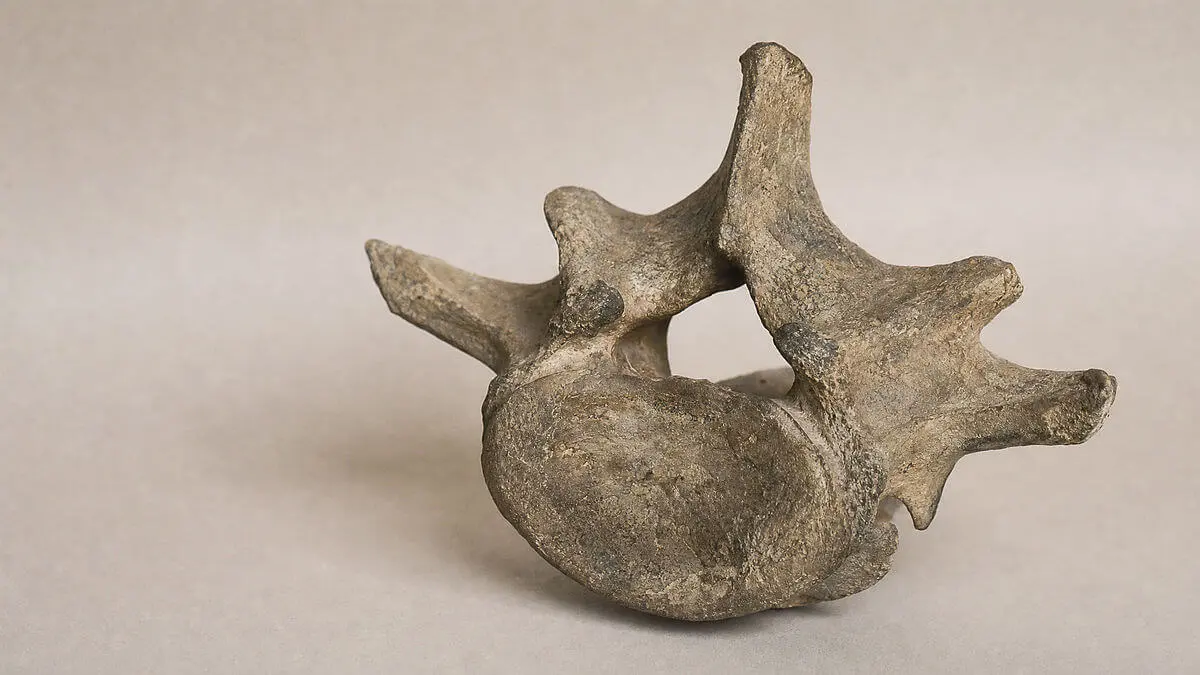
A single vertebra found in Taiwan reveals that between 800,000 and 400,000 years ago a python measuring about 4 meters was able to dominate an ecosystem that is unrecognizable today. The piece comes from the Chiting formation, near Tainan, a unit known for its fossil wealth. Its age, between 0.8 and 0.4 million years, places this snake in a landscape in which Taiwan was totally different from today.
It would be a Python sp., but without assigning it to any specific species. The vertebra combines anatomical features characteristic of pythons, especially in closing structures between vertebrae, which help stabilize the body during constriction. The work proposes that the animal was around four meters in length, longer than any current snake in Taiwan. The data suggests that during part of the Pleistocene the island could have housed top reptilian predators. The vertebra is robust and, in proportion, much wider than it is long, a common pattern in large constrictors. The most useful detail for diagnosis is the zygospheno-zygantrum joint, a bony structure that fits with the next vertebra and limits excessive twisting. In this fossil it is “massive” and with a small bulge (tuberosity), a combination that fits the genus. Python as described by previous comparative works reviewed by the authors.