
In a study published in Nature In 2004, researchers Dennis Bramble and Daniel Lieberman explained that human legs function as an elastic system when running, capable of storing and reusing energy.
When the foot hits the ground, the plantar arch is compressed and the knee flexes, which lowers the center of gravity slightly. In the next phase of the stride, that energy is released and propels the body up and forward.
Some of the energy from impact is stored in structures such as the Achilles tendon, which connects the calf muscles to the heel, and the iliotibial ligament, a band of connective tissue that extends from the pelvis to the tibia. The gluteus maximus inserts into the iliotibial band. Curiously, these elements barely intervene when walking: their main function is linked to running.
Tendons that function as springs
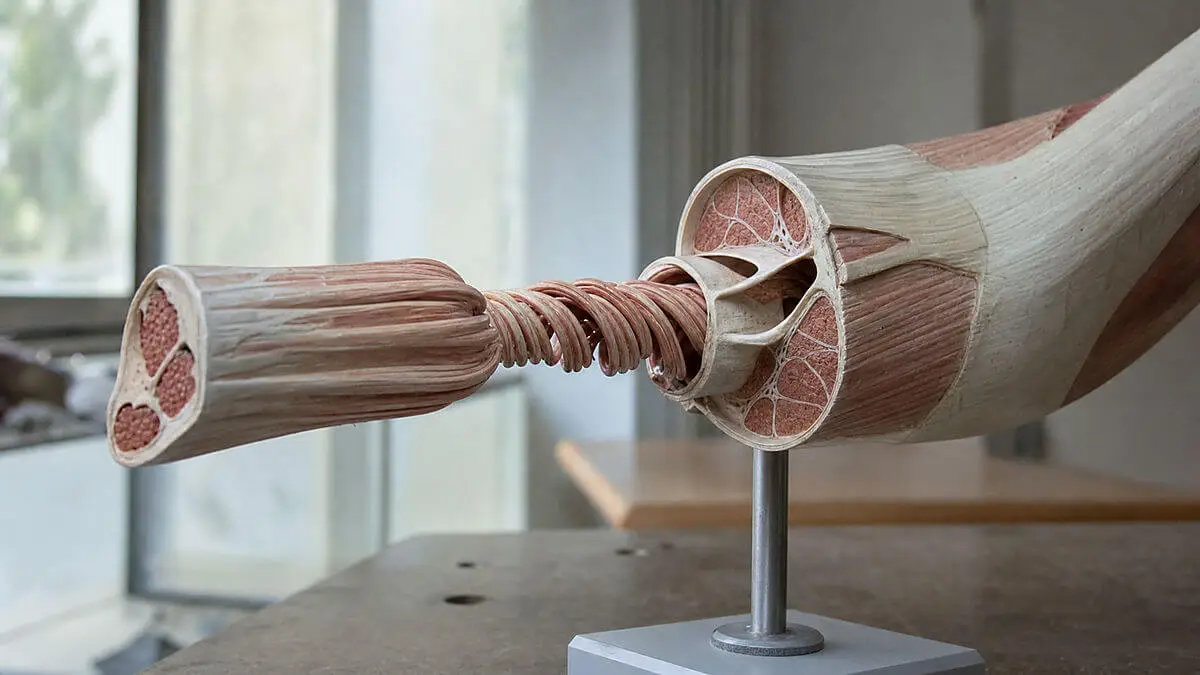
Tendons connect muscles and bones and act as authentic biological springs. They are made of collagen, a protein whose fibers are organized in a spiral. This structure gives them great resistance and a notable capacity to store elastic energy.
How we maintain balance when running
In many running animals, the tail is key to maintaining balance: its movement compensates for the inertia that pushes the body forward with each stride. Lacking a tail, humans have developed other biomechanical solutions to avoid losing stability.
Lacking a tail, humans have developed other biomechanical solutions to avoid losing stability.
Every time the foot hits the ground, the body tends to lean forward. To counteract this movement, the gluteus maximus, one of the largest muscles in the body, comes into action. By contracting, it helps prevent falling.
The structure of the trunk also contributes. A relatively narrow waist and flexible chest allow the arms and shoulders to swing alternately, which helps stabilize movement during running.
