
Most viruses found in our genome are inactive. Over time, they have lost the ability to infect new cells and change locations within the genome. “Normally they lose a complete gene, which is the envelope gene, and then they cannot leave the cell and infect another one,” explains Sara R. Heras.
Many end up converted into retrotransposons: fragments or sequences that the cell can reuse. “But there are still some who do have that envelope gene,” confirms the expert. On certain occasions, these can leave the cell and re-infect others.
Ancient viruses and aging
One of the most intriguing lines of research points to aging. Various studies suggest that, As we age, some of these viral elements could become activated and contribute to inflammatory processes.
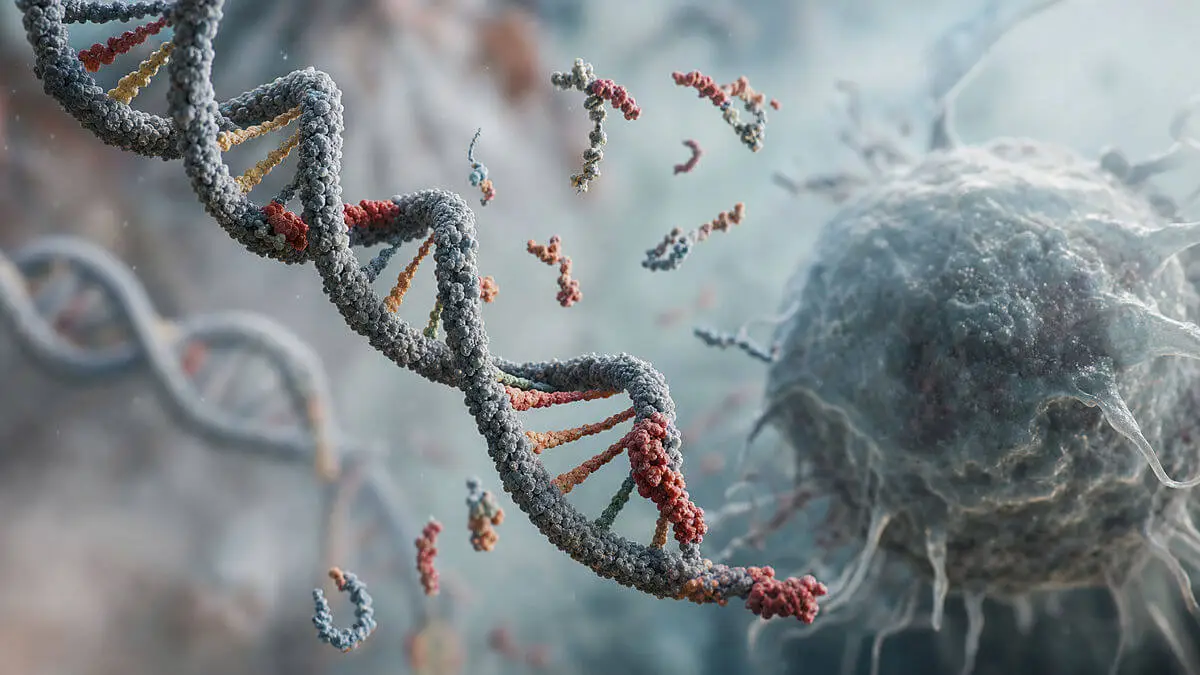
“Senescent cells, those that are already very old, would be capable of transmitting aging from viral particles to other nearby cells,” explains Heras. This could indicate that ancient viruses are involved not only in embryonic development, but also in advanced stages of life.
Senescent cells, those that are already very old, would be capable of transmitting aging from viral particles to other nearby cells
A possible example is HERV-K (HML2), one of the “youngest” families of endogenous retroviruses in evolutionary terms. It preserves almost complete sequences that may still encode viral proteins. “It seems that endogenous retroviruses could play an important role, since they are reactivated,” confirms Heras.
The role of control mechanisms
With age, the body’s control mechanisms weaken and some of these sequences begin to become deregulated. This has led to the suggestion that perhaps modulating them could influence aging and some associated diseases. It is suspected that diseases such as Alzheimer’s could also have some relationship with viral infections.
From this perspective, aging could be interpreted as a process related to mechanisms similar to those of an infection or a disease. However, as Heras states, it is likely that the role of these viruses is just “one more factor” within a complex process.
